Skip to content

Strategy in transformation

Strategy implementation

Strategy implementation: turn strategic decisions into initiatives, clear responsibilities and reliable collaboration, so strategy changes how you work.

Strategy implementation
  • Siemens
  • Porsche
  • Bayer
  • BASF
  • Henkel
  • Sony
  • Metro Group
  • McDonald’s
  • E.ON
  • Dräger
  • Sennheiser
  • Schüco
  • WIKA
  • Currenta

An approved strategy only changes day-to-day work once it shapes decisions about customers, processes, capabilities and resources. That is why transformis approaches strategy implementation together with the organisation in which it has to happen.

What you come away with

  • Strategic initiatives with clear ownership
  • Linking goals, processes and capabilities
  • Agreed routines for decisions and reflection

How we work

  1. 01

    Translate

    Translate the picture of the future into levers, a strategy map and measures.

  2. 02

    Embed

    Clarify responsibility, collaboration and resources for initiatives.

  3. 03

    Observe

    Track implementation progress, target development and assumed impact separately.

  4. 04

    Adjust course

    Review decisions and assumptions regularly within the leadership team.

Defining a shared target picture

A strategy map can connect financial goals, customer value, internal processes, and learning and growth. The links are discussed as shared assumptions. This shows which changes the new positioning requires.

Designing initiatives and decision paths

Strategic initiatives need owners, the right people involved and a place where progress and conflicts are dealt with. Depending on the situation, organisational design, roles, forms of communication and people development become part of implementation.

A strategy only changes the business once it shapes decisions, processes and capabilities.

Organising learning and course correction

Implementation produces new insights. Regular reflection clarifies whether measures are really contributing to the intended development and which assumptions need revising. Internal owners are supported in taking on more and more of this work themselves.

Book an initial call

Connecting the picture of the future, levers and responsibility

Choosing a strategic positioning is something different from implementing it. After future scenarios have been assessed, a vision of the future emerges that describes the future business identity. For implementation, the essential levers are related to one another in a Strategy Map. The leadership team checks whether the assumed connections between customer benefit, processes, capabilities and economic objectives are plausible.

Read more

For each lever, measures are specified in a master plan. A list of projects is not enough: responsibilities, dependencies and resources must fit the chosen positioning. To this end, we involve the functions that will later make decisions or deliver services. Where a strategic initiative requires new collaboration, organisational design and the development of those involved also become part of implementation.

Monitoring implementation without claiming impact

KPIs serve as measurement and management indicators for strategy implementation. In addition, impact monitoring distinguishes between a completed measure, an achieved target value and an expected impact. This distinction guards against concluding that a completed project has already fulfilled the strategic intent. Management agrees on observation points and dates for joint reviews. These examine whether the initiative is reaching day-to-day operations, which assumptions are being confirmed and which decisions still need to be made.

Read more

A project report from a utility and infrastructure group shows that strategy and transformation must be coordinated across several levels; the specific project results remain on the case page. We design a routine in which those responsible can name obstacles, change priorities and learn from implementation.

Vom Zukunftsbild zu strategischen Initiativen: Ein verständliches Zukunftsbild beschreibt die künftige geschäftspolitische Identität und strategische Positionierung. Die Strategy Map übersetzt dieses Bild in geprüfte Ursache-Wirkungs-Beziehungen zwischen Finanz-, Kunden-, Prozess- sowie Lern- und Entwicklungsperspektive. Daraus lassen sich strategische Initiativen, Verantwortlichkeiten und ein getrenntes Umsetzungs- und Wirksamkeitsmonitoring ableiten.

Arbeitsergebnisse: Strategische Initiativen mit geklärter Verantwortung; Verbindung von Zielen, Prozessen und Fähigkeiten; Abgestimmte Entscheidungs- und Reflexionsroutinen.

The specific set-up develops with the brief. Responsibility for business decisions stays with the company.

During implementation, several levels change at the same time. A strategy map describes assumed relationships between financial goals, customer benefit, internal processes and the capabilities that need to be built for them. A master plan assigns measures and responsibilities to these. Both must be discussed in the leadership team, because a seemingly coherent map does not yet represent proven causality. We ask which strategic initiative should create impact first, which areas need to work together and what the organisation needs to learn for this.

If a new customer promise requires shorter response times, for example, this affects not only sales, but also decisions, handovers and capabilities in service delivery. The example is a testing logic, not a customer measurement. Reviews later separate the implementation status from goal achievement and impact. A measure can be completed on time and still not change the desired behaviour. This observation should lead to a leadership decision early enough so that implementation does not become mere reporting.

Every strategic lever needs suitable measurement and management indicators. When selecting them, we ask whether a figure describes actual progress towards the target picture or merely records activity. The sequence of initiatives is also a leadership decision: some first create the preconditions for others, such as new capabilities for a changed customer service. These dependencies are made visible in the master plan.

In reviews, the responsible areas can thus not only report deadlines, but decide on problems at the interfaces. A review may result in changing a measure, re-examining an assumption or shifting a priority.

Implementation does not begin only when a finished paper is distributed. Those involved must be able to connect the chosen direction with their own tasks. A strategy map can visibly relate goals for markets and customers, processes, learning and development, and economic impact to one another. The leadership team clarifies which initiatives are launched first, who makes decisions and which observations trigger a course correction.

As the process continues, it is not only completed measures that are reported. Changed customer reactions, new obstacles and feedback from the organisation also belong in the joint evaluation. In this way, the strategy is translated into decisions and work routines. Which key figures are suitable must be decided for the specific strategic intent and the available data.

Frequently asked questions

What comes after a picture of the future has been agreed?

Levers, measures, responsibilities and points to monitor are translated into the organisation. The main levers are related to one another in a strategy map, and a master plan sets out the measures for each lever. A list of projects is not enough: owners, dependencies and resources have to fit the chosen positioning.

What is a strategy map for?

It makes the assumed links between financial goals, customer value, internal processes, and learning and growth testable. The leadership team discusses whether these links are plausible, because a map that looks coherent is not proof of cause and effect. Strategic initiatives, responsibilities, and separate monitoring of implementation and impact can be derived from it.

Who carries implementation?

The executives responsible and the functions involved; we support the set-up, reflection and coordination. We involve the functions that will later make decisions or deliver services. Where a strategic initiative calls for new ways of working together, organisational design and the development of those involved become part of implementation. Responsibility for business decisions stays with the company.

When is course correction needed?

When reviews show that measures have stalled, targets are being missed or the expected impact is not materialising. Impact monitoring distinguishes between a completed measure, a target reached and the expected effect: a measure can be finished on time and still not change behaviour as intended. A review may lead to changing a measure, retesting an assumption or shifting a priority.

In practice

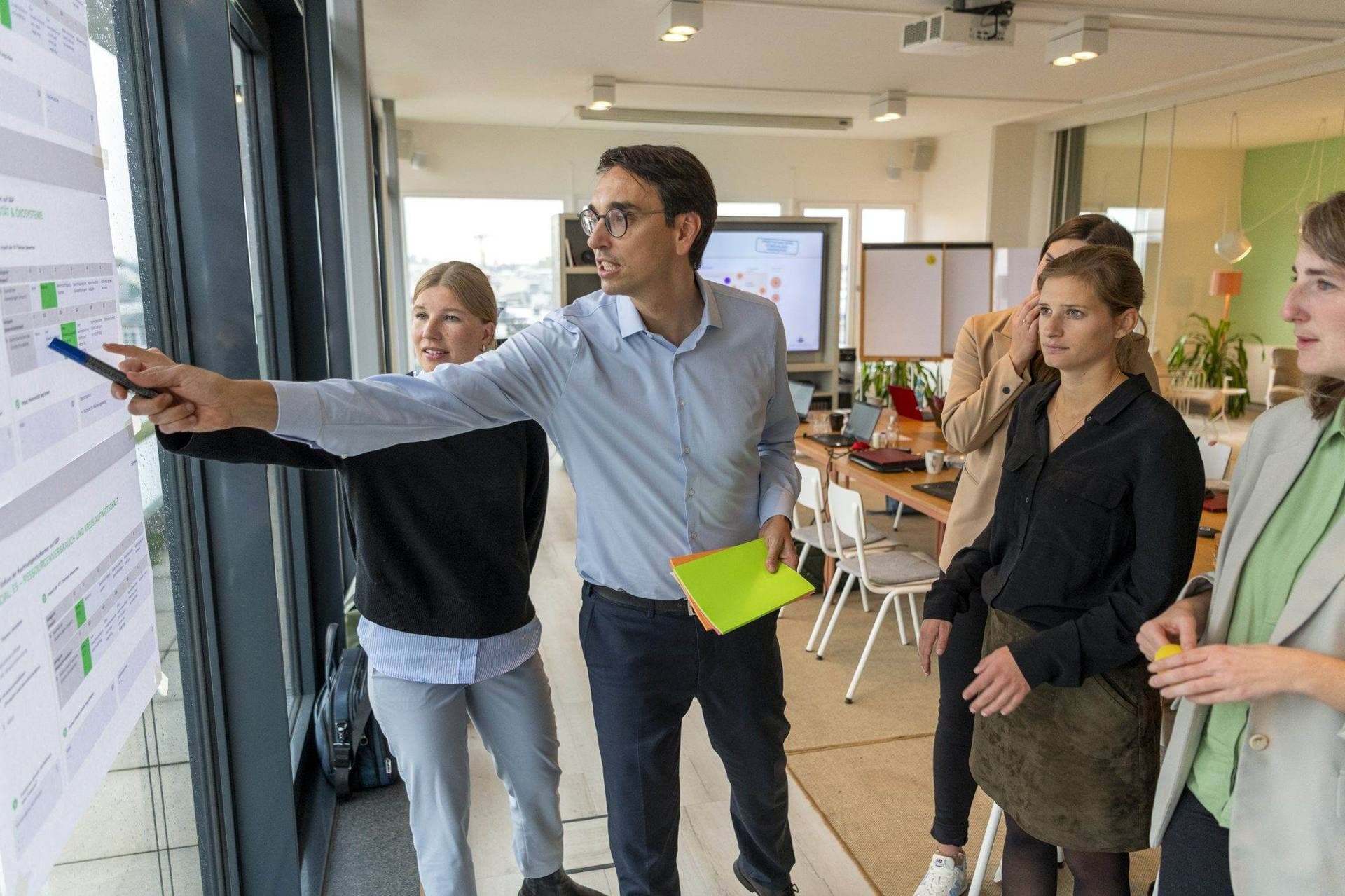
transformis consultant pointing at a wall while the team looks on

Case study

Logo DVV

From efficiency programme to forward-looking organisation

How a utility and infrastructure group tackled questions about its future across company boundaries.

  • Leadership, feedback and decision formats introduced at group and topic level.
  • The programme continued with digital participation formats during the pandemic.
  • Reviews documented in 2023 and a clearer division of roles between line management and corporate development.
Read case study

Prefer to talk directly?

What decision are you facing? Together, we clarify your situation, the people involved and the right next step.

Jan-Niclas Bockard

Jan-Niclas Bockard

Director | Chief Operating Officer (COO) and Head of corporate strategy competence team

Your initial call

Let’s talk about your situation and what you want to develop in your organisation.

  • Your situation
  • What brings you to us
  • Possible next steps
Book an initial call