Based on the analysis findings, those responsible select suitable starting points. A new meeting routine, for example, can bring more perspectives together before a decision; clarifying roles can make recurring conflicts manageable. Whether an intervention has the desired cultural effect is then observed and incorporated into the next step. In this way, the analysis leads to a verifiable development process. The aim is a culture that supports the company's tasks, not the adoption of a general cultural ideal.
For the culture diagnosis, we use a compact online survey, individual interviews and focus groups. Combining them is important, because quantitative patterns can show differences between groups, but their meaning often only becomes clear in conversation. Questions about the current and the desired culture provide a further point of reference.
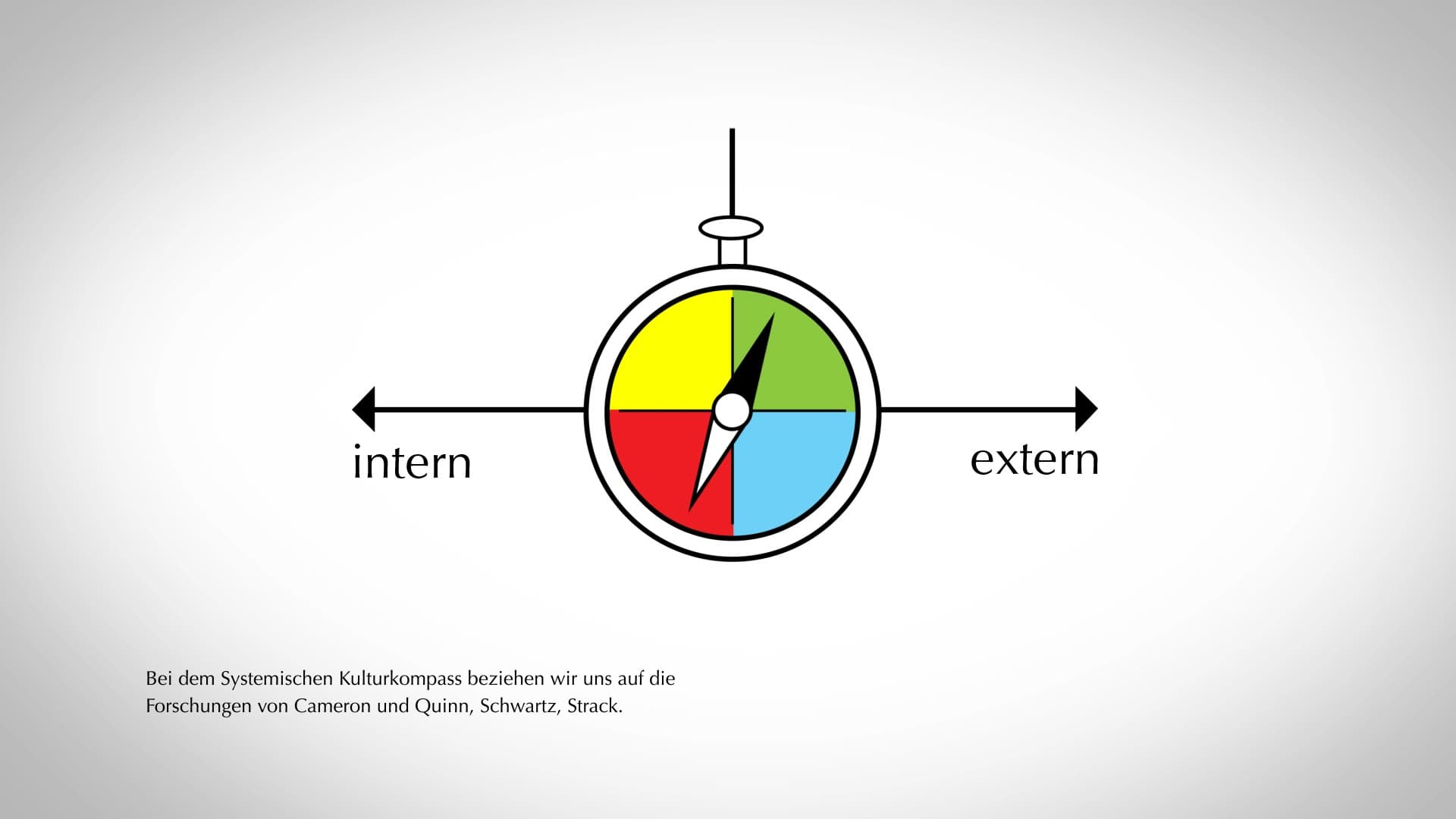
We do not let a single average across all units do the talking: contrasting perceptions in particular can point to a decisive interface or an unspoken rule. The Systemic Culture Compass is designed to visualise such patterns and so make them discussable. They are then linked to the strategic task.
Culture is a complex of decision premises that have not been explicitly decided. It is therefore not changed by a new statement of values. Influence arises through decisions that can be shaped: for example through formal communication channels, the staffing of key roles, organisational structure and people development. After an intervention, we observe which change in behaviour actually occurs. This may differ from the intention; that difference belongs in the further work. The analysis thus provides a verifiable starting point for culture development without promising simple controllability.
Culture cannot be fully explained from individual statements or a survey. It becomes observable in recurring situations: Who can disagree, how is a mistake handled and which expectations operate unspoken? We link such examples to formal structures, leadership behaviour and the strategic task. Different views from units and hierarchical levels are set side by side so that an average does not conceal important tensions.
Together, participants examine which patterns support their current performance and which make a desired change more difficult. The result is well-founded hypotheses and starting points for work on concrete conditions. A culture analysis does not provide a conclusive character diagnosis of the people in the company; its findings must be tested in further decisions and experience.