Skip to content

Family businesses and business families

Shaping strategy, succession and the relationship between family, ownership and management.

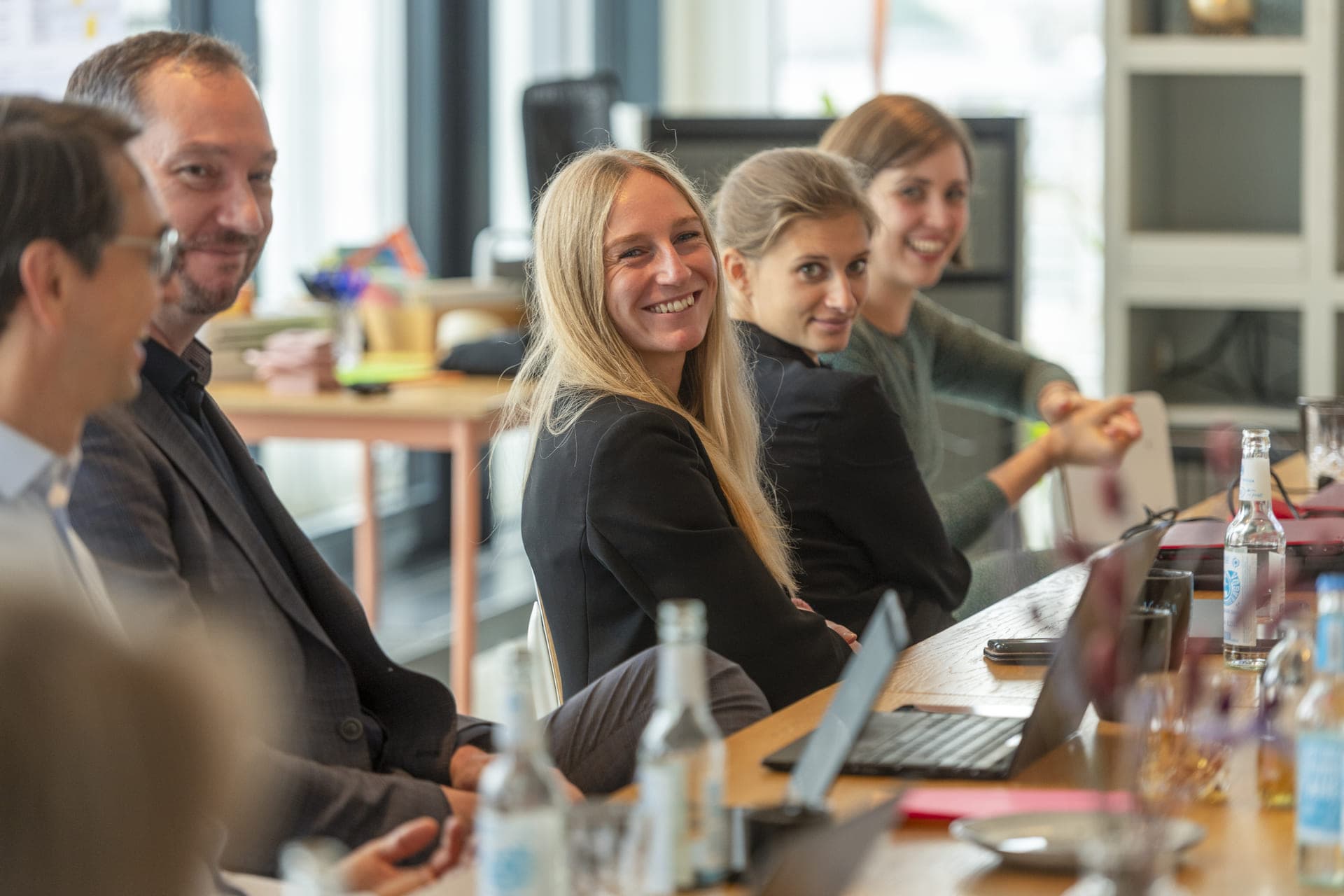
transformis consultant in a bright office
  • SEITZ
  • Dräger
  • WIKA
  • Sennheiser
  • Schüco
  • Henkel
  • Engelhard Arzneimittel
  • Porsche
  • Siemens
  • Bayer
  • BASF
  • Sony
  • Metro Group
  • McDonald’s

Questions to start with

  • What do those involved expect from the company?

  • Which leadership or ownership transitions are actually coming up?

  • What rules help the family keep making decisions together?

In a family business, economic responsibility, ownership and family relationships are intertwined. A strategic realignment or succession therefore often touches several levels at once. Our consulting for family businesses creates a framework in which these perspectives are first kept apart and then brought together.

Vision and business direction

Which strengths should carry the business into the future, and where does it need a new direction? Market and customer expectations are linked with the company’s capabilities and the owners’ ideas. Different visions of the future become visible, so they can be decided on.

Family, ownership and management

A family strategy can set rules for information, participation and decision-making. It also covers the role of family members in the business and how differing interests are handled. A family charter can record the agreed principles.

Shaping generational change

The handover covers mandates, requirements and how people work together during the transition. Developing the successors and defining the future role of the outgoing generation are part of the work. Legal and tax steps are coordinated with the relevant specialists.

Aligning family and management

The business family and management may have different expectations about pace, risk and continuity. Our brand positioning names identity, succession, talent development and the balance between tradition and innovation as connected tasks. The work therefore has to clarify which questions are decided in the family, in ownership and in management, and how the results connect.

What a family strategy actually clarifies

A family strategy begins with the history and identity of the business family. Written and unwritten rules are discussed, as are family and company goals, roles in ownership and management, and expectations of the next generation. The question of whether family or company should take precedence in a conflict of goals is also asked explicitly. This can lead to a jointly formulated strategy with principles and decision rules.

Read more

For an upcoming succession, it is also clarified how the handing-over and the taking-over generation work together during the transition. The published case study describes a specific generational change; its results are not a general promise. Which family members, external executives or specialists are involved depends on the mandate of the family concerned.

Preparing shareholders for their role

Members of the shareholders’ meeting need skills and knowledge to fulfil their role. Without a targeted qualification process, the company exposes itself to the risk of destructive influences. Many companies that are active in this area concentrate on business management. That is understandable: anyone who has a vote in the company should be able to read a balance sheet and get to grips with economic issues. In family businesses, it is just as important to know and internalise the culture and values of the company and the family, in order to safeguard their interests and act in their spirit.

Read more

The shareholder group consists of two groups: people with an active role in the company and people who appear only in the shareholders’ meeting. The second group is often neglected in qualification, which stands in the way of fully informed decision-making. In addition, often only shareholders who have already taken on their role receive further training. It is advisable also to include those who will take on such a position in future, and those who shape the growing generation.

Qualification opportunities should therefore be offered to all shareholders and followed up. The requirements can be set out bindingly in the family governance. Topics are corporate strategy in line with family governance, organisational design and structures, conflicts and their resolution, different basic attitudes in business families, business succession and the dynamics of a family business. The module is designed for twelve months. The aim is a shareholders’ meeting that exercises its responsibility with professional training and familiarity with the corporate culture and values.

Filling key roles in a generational change

Putting the right person in the right place is one of the most difficult and consequential tasks of corporate management. New people enter decision-making functions and have to connect with existing structures. At the same time, they test how far structures and routines suit their personality and leadership style. In the short and medium term, this can trigger changes that are experienced as serious and unsettling.

Read more

In the succession process, those responsible are under particular pressure. A decision that follows family logic can be fatal for the company, and vice versa. On the one hand, a family business wants to use the potential that lies within the family, in management or in supervision. On the other hand, the necessary resources are sometimes available neither in the family nor in the company and have to be brought in from outside. In both cases, the decisions can involve tension and hurt feelings.

Objective decision aids defuse this potential for conflict. For this, transformis uses aptitude diagnostics with personality assessment instruments that match organisational requirements against personality profiles and the competencies needed for the function. They clarify the fit, show strengths and weaknesses, identify what needs to be compensated for and lead to targeted support measures.

A structured process is recommended that identifies the relevant people and prepares them for their roles. It comprises a function description, requirement profiles, selection criteria, selection procedures, qualification programmes and suitability assessment. This applies to candidates from within and outside the family and to key functions at both shareholder and company level. Three to twelve months are planned. This way, the handing-over generation can look ahead to the change with confidence, and the successor generation can start its task well prepared.

In practice

transformis workshop with participants from several generations around a table

Case study

Logo Seitz

Generational change: developing a shared vision of the future

How a business family brought together succession, strategic options and new roles.

  • A shared vision of the future with prioritised options, a strategy map and strategic initiatives.
  • Handover of management two years after the start, as documented in the report.
  • Leadership roles clarified and a supervisory board newly established.
Read case study

Insights for your questions

Frequently asked questions

Where does a family strategy start?

With clarifying the business family’s identity, goals, rules and roles. It starts with the family’s history and identity; written and unwritten rules are discussed alongside family and business goals, roles in ownership and management, and expectations of the next generation. The result can be a jointly written strategy with principles and decision rules, recorded in a family charter.

Does the successor need to be decided already?

No. Criteria, roles and decision paths can be clarified first. For key roles in a generational change, transformis recommends a structured process over three to twelve months: role description, requirement profiles, selection criteria, selection procedure, development and suitability assessment. It applies to candidates from inside and outside the family, at both shareholder and company level.

How do you bring family and business together?

By first separating their different decisions and then relating them to one another. As transformis sees it, family, shareholders and company are three distinct social systems, each with its own logic: personal relationships and belonging; ownership interests and rights of influence; economic requirements. The work clarifies which questions are decided where, and how the results fit together.

Who handles the legal and tax side?

The relevant tax and legal advisers, coordinated within a shared process. transformis does not replace their advice; we work on the shared understanding of expectations, roles and responsibilities that any legal arrangement depends on. Which family members, external executives or specialists take part depends on the mandate each family gives.

Why should shareholders be trained for their role?

Because members of the shareholders’ meeting need the skills and knowledge to fulfil their role; without a targeted development process, the company is exposed to destructive influence. The transformis qualification module runs for twelve months and also includes shareholders who will only take on their role in future. Topics are strategy, family governance, conflict and succession.

Prefer to talk directly?

In an initial conversation, we clarify which decisions are coming up and which perspectives the next stage of work needs.

Robert A. Sedlák

Robert A. Sedlák

Founder and CEO transformis Consulting SE | Guest Professor ECNU Shanghai | Certified business mediator (German Mediation Act) | Head of the family business competence team

Your initial call

Let’s talk about your situation and what you want to develop in your organisation.

  • Your situation
  • What brings you to us
  • Possible next steps
Book an initial call