Skip to content

Municipal utilities and infrastructure companies

Developing a shared direction and collaboration across departments and group companies.

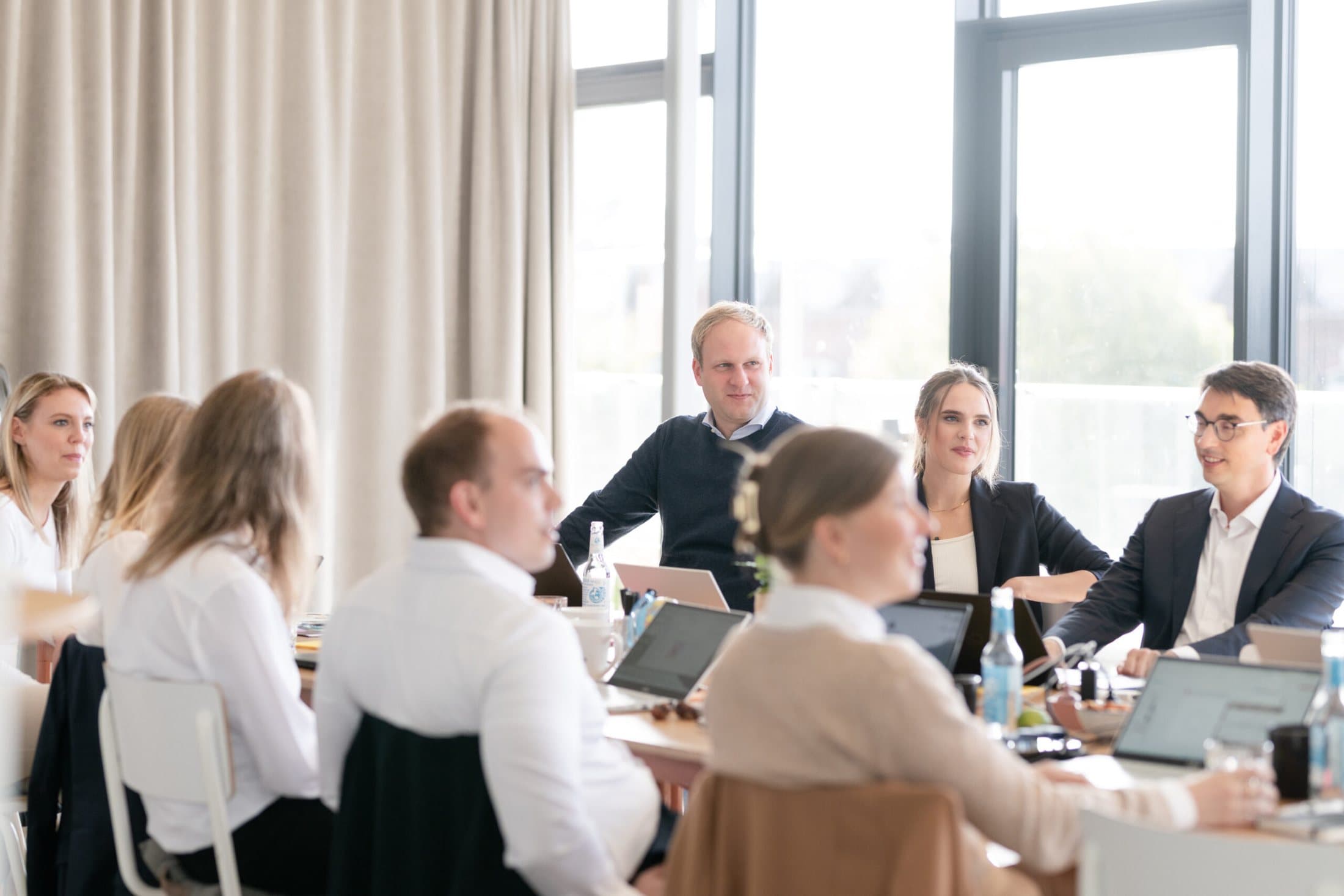
transformis group in front of a glass façade

The situation in 2026

The pressure increased again in 2026. 75% of the municipal utilities surveyed rate their financial capacity for expanding the power grid as strained or critical. For the heating transition, every second company expects its investment volume to more than double by 2030; 56% consider the financing insufficient and 61% the legal situation unclear.

Source: VKU (German Association of Local Public Utilities) surveys 2026 on grid expansion, the heating transition and financing

  • DVV
  • Stadtwerke Bonn
  • Stadtwerke Osnabrück
  • E.ON
  • Landeshauptstadt Wiesbaden

Questions that arise now

  • How do we prioritise investments?

  • Which business areas will carry us in future?

  • How do we secure financial capacity and delivery capacity?

  • How do we organise the heating, grid and digital transformation at the same time?

A group of utility and infrastructure companies combines different tasks and perspectives. To develop further, it has to decide jointly which future issues to pursue and how the organisation will work on them.

Agree on a shared direction

Strategic work matches what key stakeholders expect with what the group is able to do. It also clarifies which issues should be handled jointly and which by individual companies.

Decide across departmental boundaries

Roles, committees and communication channels determine how the organisation’s expertise feeds into decisions. Working together on real questions about the future shows where new routines or responsibilities are needed.

Embed development in the organisation

DVVision brings together strategic issues, working structures and a step-by-step change process. In every engagement, a key question is how internal managers can keep the new routines going themselves.

Strategy processes at municipal utilities

Alongside Duisburger Versorgungs- und Verkehrsgesellschaft (DVV) and its DVVision programme, transformis supported Stadtwerke Bonn in an extensive strategy process that included a Cultribute analysis of the organisation’s capabilities. Stadtwerke Osnabrück is also among our clients in the utilities sector.

Look at investment and the energy and heating transition together

Relevant areas include the energy and heating transition, regulation, investment, digitalisation and succession. Each engagement examines which decisions follow from these for the company and which organisational capabilities it needs. Technical, commercial and political perspectives have to come together in suitable formats.

Typical reasons to talk to us

  • Very high investment requirements and financing pressure
  • Regulatory uncertainty
  • Grid expansion and the heating transition
  • High project complexity
  • Scarce resources
  • Speed of decision-making

What we offer in concrete terms

  • Vision of the future, scenario analysis, corporate strategy and strategy implementation
  • Stakeholder analysis, roles and responsibilities, and decision-making processes between management, governing bodies, owners and departments
  • Transformation architecture and interface management for parallel change initiatives; leadership system and cross-functional leadership
  • Profitability analysis, cost strategy and impact monitoring as the basis for strategic prioritisation
  • Competence development, talent management and succession planning for key positions; learning architectures for knowledge transfer
  • Culture development, AI strategy, AI governance, building AI skills and AI-supported process optimisation

Deciding on future issues across a utility group

For municipal utilities, the issue is connecting different business areas with the requirements of municipal infrastructure. Using a utility and infrastructure group as an example, the DVVision programme shows how a future orientation was combined with new communication and decision routines. The formats were prepared, introduced with facilitation and then handed over to line management.

Read more

For a new brief, it has to be clarified which topics are decided jointly within the group and which in individual companies. The energy and heating transition, investment and regulation can be relevant questions, but they are not project goals set in advance. Those involved and their mandate are derived from the specific governance. The project results and figures of this case are not a general promise of benefit.

See conflicting goals as part of what a utility is

In municipal utilities, contradictions, conflicts of interest and paradoxes are built into daily decision-making and coordination processes, with a density that few other organisations experience. Economic requirements and the owners’ return expectations stand opposite social and ecological responsibility, and a decision in favour of one often comes at the expense of the other. One example: politicians demand a new bus route to a remote destination that is foreseeably going to remain loss-making, while local public transport is at the same time expected to make considerable savings.

Read more

Added to this are scrutiny by the media and the public, and the influence of politics and supervisory boards on decisions. If further shareholders or cooperation partners from the private sector are involved who follow a pure return logic, the tensions intensify. The paradoxes cluster around the relationship between economic, social and ecological interests and around the demands of external stakeholder groups.

Niklas Luhmann’s systems theory offers an explanation. According to it, modern society has developed independent functional systems such as the economy, politics, law and science. Each follows its own logic and its own code: in the economy, for example, payment or non-payment; in politics, having power or not having power. Most organisations belong primarily to one of these systems. Municipal utilities stand on the boundary between business and politics and must be compatible with both logics.

This gives rise to their contribution to society: municipal utilities integrate municipal and business logic and balance opposing interests in their decision routines. This enables a municipality to reach balanced decisions between economic, social and ecological aspects. Those who recognise these tensions as the core of the task, instead of merely complaining about them or wanting to reduce them, can provide suitable input for development. Business decision-making principles therefore cannot be transferred wholesale to public services.

Leadership and stakeholder analysis in the strategy process

In this understanding, leadership is a capability of the organisation and ultimately a team effort. It ensures that conflicting goals and factual contradictions are negotiated in cooperative relationships based on trust, without permanently damaging personal relationships. According to Rudolf Wimmer, it directs its attention to six areas of work: the future, the relevant environments, dealing with scarce resources, the appropriate form of organisation, the coupling of person and organisation, and opportunities for self-observation.

Read more

For each leadership function, it is possible to describe what performance expectations the environment has of it, which decisions and negotiations have to be conducted, which conflicting goals have to be negotiated and which stakeholders have to be served. This places demands on the individuals: analytical, social and action-oriented skills, the ability to build relationships, the ability to keep a distance, the will to shape things and self-reflection.

Dealing with paradoxes carries particular weight. Leaders must be able to connect and to set boundaries, to reflect and to reach conclusions, to create order and to open up space for the new. They protect their own area from irritations and at the same time feed in relevant disturbance from outside. They make full use of existing knowledge and remain alert to situations in which dealing with not-knowing is what matters.

In the strategy process, the strategy team uses a stakeholder analysis to become aware of the network of relationships in which the organisation is embedded. First, the most important stakeholders are identified, such as the city, supervisory bodies, owners, cooperation partners, customers, employees, employee representatives, authorities, the media and citizens’ initiatives. Then the type of interest, type of power, importance for success and intensity of the relationship are described. The evaluation shows interactions, opportunities and threats and makes conflicts of interest among the key people transparent.

If a change requires new patterns of cooperation and at the same time new competencies, a learning architecture combines organisational development and people development so that both levels develop in sync.

Make the strategy review a fixed routine

Regular strategy work is the communication routine in which stakeholder requirements are fed in, conflicts of interest are resolved and fundamental decision premises are reviewed. Strategic commitments give the organisation the focus that keeps it able to act under uncertain conditions. In the strategy review, they are measured at regular intervals against developments in the relevant environments. Two core questions guide the work: which commitments the organisation deliberately holds on to despite indications that change is needed, and which it has to change in order to secure its success and existence.

Read more

The strategy process follows seven steps: determining the strategic starting point, specifying core competencies, developing and evaluating strategic options, defining positioning and goals, drawing up a master plan, and monitoring and managing implementation. Expert knowledge on market, competition and trends is fed in at the beginning as a data basis. The strategy team decides which hypotheses and conclusions it adopts or changes. Controversies are given space in the joint working format so that they are dealt with there and not in side conversations.

In a group with a holding company and operating companies, three process architectures can be considered. In the consistent top-down process, the strategy is developed at group level and specified in the companies. In the conditioned bottom-up process, the companies work in their own strategy teams within group guidelines, and the results are brought together at a group retreat. In the synchronous process, both levels run in parallel and are regularly interlinked in joint meetings. Hybrid forms are also possible.

Regardless of the architecture, the supervisory boards must be closely involved, with regular coordination and feedback loops and the necessary approvals. It often makes sense to involve further shareholders. The outcome is clear needs for decision and action, shared with the key people. Because those who will later carry the implementation take part, acceptance and commitment are higher. Positioning and development goals remain open to correction on good grounds.

In practice

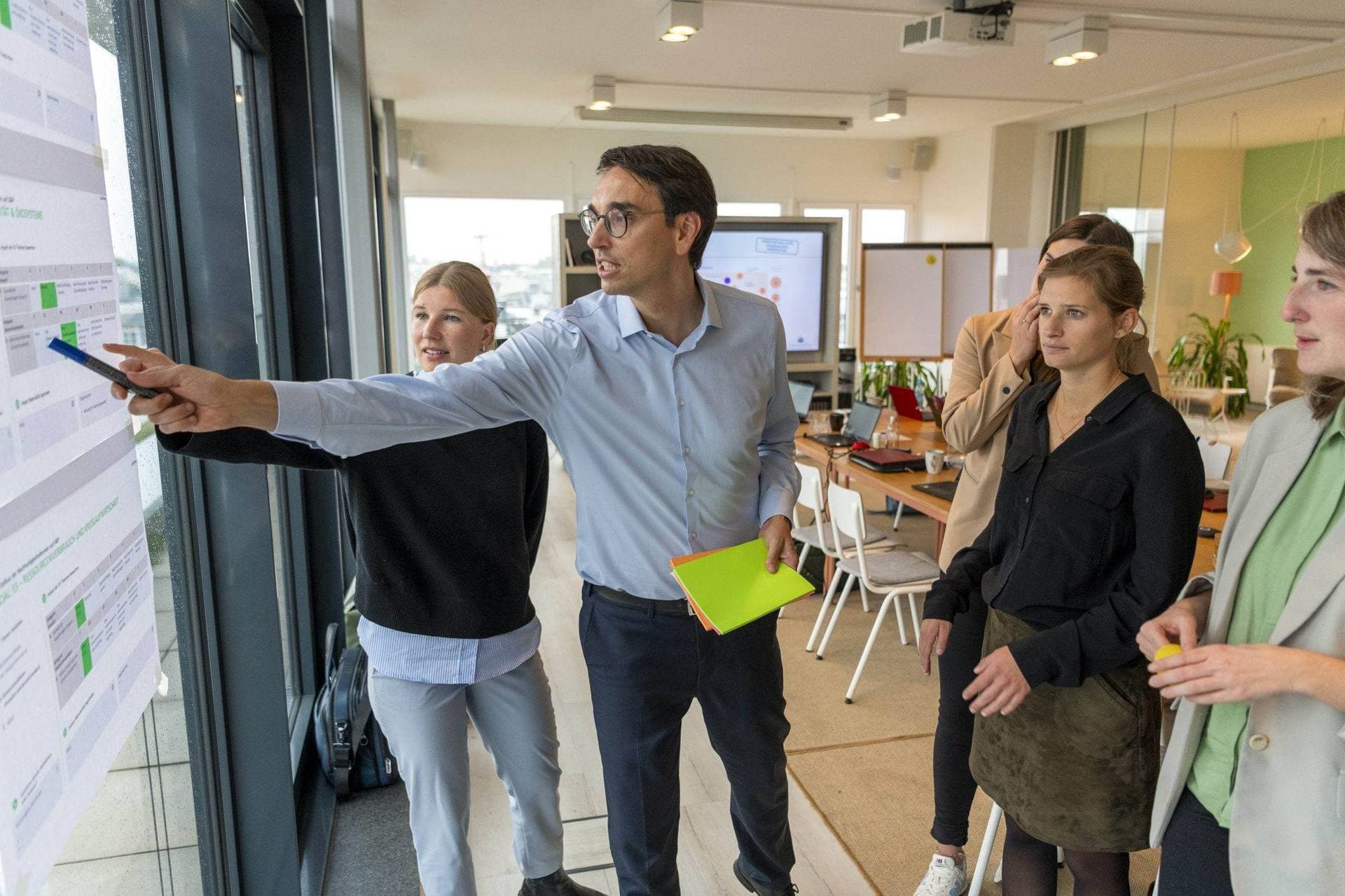
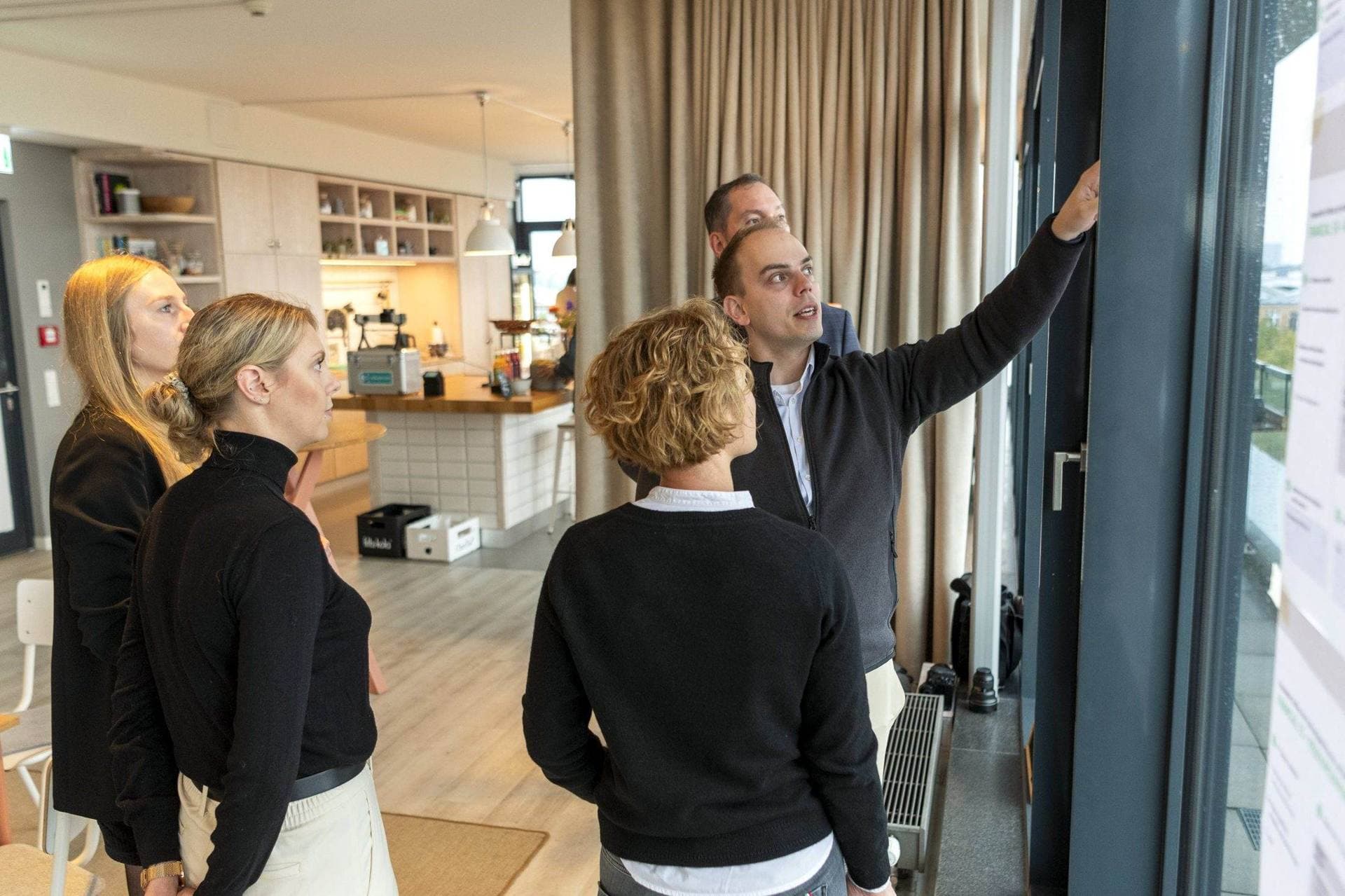
transformis consultant pointing at a wall while the team looks on

Case study

Logo DVV

From efficiency programme to forward-looking organisation

How a utility and infrastructure group tackled questions about its future across company boundaries.

  • Leadership, feedback and decision formats introduced at group and topic level.
  • The programme continued with digital participation formats during the pandemic.
  • Reviews in 2023 and a clarified division of roles between line management and corporate development.
Read case study

Insights for your questions

Frequently asked questions

Which issues are decided jointly?

It depends on the group, its companies and their mandates. For a group with a holding company and operating companies, there are three possible process designs: strictly top-down; a guided bottom-up process in which companies form their own strategy teams within group guidelines; or a synchronised process in which both levels work in parallel. Supervisory boards are closely involved in each case.

What does the DVVision programme show?

A concrete example of linking future direction with new decision routines at a utility and infrastructure group. Leadership, feedback and decision formats were introduced at group and topic level, and the programme continued with digital participation formats during the pandemic. Reviews in 2023 and a clearer division of roles between line management and corporate development are documented.

What role does line management play?

New routines should carry on independently once our support ends. That is why the formats were prepared, introduced with facilitation and then handed over to line management. In every engagement, the key question is how internal managers will own the routines; because the people who will later be responsible for implementation take part, acceptance and commitment are higher.

Do the case figures apply to other utilities?

No. They apply only to the documented company and its engagement. The energy and heating transition, investment and regulation may well be relevant, but they are not project goals fixed in advance. Who takes part, and with what mandate, follows from the actual governance; the engagement clarifies which issues are decided jointly across the group and which by individual companies.

Why are conflicting goals normal for municipal utilities?

Because municipal utilities sit on the boundary between business and politics and have to work within both logics. Commercial demands and owners’ return expectations stand against social and environmental responsibility. As transformis sees it, this is precisely their contribution to society: they combine municipal and commercial logic and balance competing interests in the way they make decisions.

Book your initial consultation

In an initial conversation, we clarify which decisions are coming up and which perspectives the next stage of work needs.

30 minutes, free of charge, by phone or video. Choose your time directly in the calendar.

Jan-Niclas Bockard

Jan-Niclas Bockard

Director | Chief Operating Officer (COO) | Head of Corporate Strategy competence team

Your initial call

Let’s talk about your situation and what you want to develop in your organisation.

  • Your situation
  • What brings you to us
  • Possible next steps
Book an initial call