Skip to content

Strategy in transformation

Innovative Customer Segmentation (IKS)

Needs-based customer segmentation: distinguish customers by what they expect, then derive value propositions and clear priorities for portfolio and sales.

Innovative Customer Segmentation (IKS)
  • Siemens
  • Porsche
  • Bayer
  • BASF
  • Henkel
  • Sony
  • Metro Group
  • McDonald’s
  • E.ON
  • Dräger
  • Sennheiser
  • Schüco
  • WIKA
  • Currenta

Sorting customers by revenue, sector or region does not explain why they buy. Innovative Customer Segmentation (IKS) is a needs-based approach to customer segmentation that looks at needs, behaviour and bottlenecks. We connect this outside view with your company’s value creation and capabilities, so that distinct customer groups lead to distinct value propositions that hold up.

What you come away with

  • Needs-based customer segments
  • Distinct minimum requirements and benefit potential
  • Starting points for portfolio, sales and resources

How we work

  1. 01

    Observe

    Agree a needs- and behaviour-based framework with those responsible for strategy and markets, and test customer expectations.

  2. 02

    Segment

    Group customers with similar expectations, examine the differences and prioritise target segments deliberately.

  3. 03

    Translate

    For each target segment, link threshold benefit, differentiation and a specific value proposition to your portfolio and organisation.

Innovative Customer Segmentation on film

How Innovative Customer Segmentation groups customers by the benefit criteria that really matter to them and identifies revenue and profit potential.

When you need a fresh view of your customers

A company can offer excellent products and still appear interchangeable. This situation is often the result of a strong product orientation: attention is focused on the industry and its competitors, offerings become comparable and real benefit expectations are lost from view. A typical occasion for IKS is therefore the question of why customers with apparently the same profile react very differently to the same service offering.

Read more

Other occasions are a broad portfolio without clear priorities or a sales organisation that treats all customers according to the same criteria. We begin with the question of what benefit customers actually expect and what obstacles they experience in their work. We also look at groups along the industry value chain that influence the business even though they are not direct contractual partners. Only once this concept of the customer has been clarified can a meaningful segmentation be built.

Develop a framework for observing customers from their point of view

In the first step, we define with those responsible which needs-based and behaviour-based criteria will be examined. Size, revenue, region and product allocation can be helpful for a market overview. As the sole criteria for customer segments, however, they are often misleading: not every mid-sized company has the same expectations. The observation grid therefore focuses on needs, behaviours, bottlenecks and characteristic expected benefits.

Read more

The choice of these criteria is itself a strategic decision, because it determines which differences will later become visible. A group may, for example, be particularly time-critical, price-sensitive or safety-oriented, regardless of company size. We test internal assumptions against suitable feedback from the market and make clear where a supposition is not yet a proven customer expectation. This creates a robust basis for further analysis instead of a new label for the old sales categories.

A value proposition is the unique combination of benefit criteria as customers see them.

Form segments and prioritise target customers

Based on the observation framework, we examine which customers are similar in their benefit expectations and where clear differences exist. The result is segments that are distinguishable from the outside and as similar as possible within the segment. The analysis explicitly answers: who are our customers, what behaviour characterises them and what benefit do they expect? Then comes the business decision. Not every segment has to be served with the same intensity.

Read more

We combine the findings with core competences and potential for customer loyalty. The leadership team decides which target segments have priority and what consequences this has in operational business. This requires clear priorities and “right-of-way rules”. This decision prevents every enquiry from automatically tying up the same resources. A case study from strategy work in a chemical park links customer segmentation with market positioning and implementation; its project-specific results are in the linked case and are not generalised here.

Book an initial call

Define value propositions and test them in the business

For each chosen target segment, we describe the value proposition using the following benefit criteria: product and service portfolio, time, quality, price, service, relationship and brand. In doing so, we distinguish threshold benefits from differentiation. The threshold benefit is what a customer expects at a minimum. Too low a level creates dissatisfaction; an unnecessarily high level consumes resources without creating additional customer benefit. Differentiation arises from a combination of criteria that suits the segment, for example response time, advisory offering and a dedicated contact person.

Read more

The generic strategy can differ for each segment: cost leadership, product leadership, price-value strategy, customer intimacy and system lock-in serve as a frame of reference. The chosen value proposition is then aligned with portfolio, processes, capabilities and leadership. Contradictory requirements of different target segments become visible instead of being concealed in sales. Only then can it be decided how the company actually intends to deliver on its promises in everyday practice.

Everyday observations make the benefit criteria tangible. Time can mean the span until a price quote, preparation of an offer, delivery or response to a complaint. Relationship covers reachable contact persons, frequency of contact and closeness to the customer organisation. Quality is about whether a promised service commitment is kept without any relevant impairment. These criteria are not rated the same across the board for all customers.

One segment may see a fast response as indispensable, another the quality of advice. The evaluation must therefore make the respective expectation visible before services are prioritised. The generic strategies are no substitute for the customer view either: cost leadership, product leadership, price-value strategy, customer intimacy and system lock-in describe different ways of serving a segment.

We then examine which processes and capabilities are needed to deliver on the chosen value proposition. Especially when several segments receive different promises, internal conflicts of objectives can arise. Sales must then not steer solely according to its previous product logic while service delivery and service are unaware of the new promise. Segmentation creates a common frame of reference for these decisions.

A new spreadsheet in sales is not enough to implement the segmentation. We link target customer segments with a strategy map and with decisions on processes, customer management, and learning and development. A segment decision can, for example, change requirements for response times, service relationships or competencies.

We therefore discuss with those responsible which parts of the existing business model fit a chosen segment and where contradictions arise. A segment that is deliberately not prioritised is also a strategic decision: it frees up resources for those customers whose expectations the company can meet particularly well with its capabilities. Feedback from the market and customer contact is then used to review the observation framework and the value propositions, rather than treating segments as permanently fixed pigeonholes.


Frequently asked questions

How does customer segmentation differ from market segmentation?

Market segmentation usually sorts by sector, region or size. IKS groups customers by their needs, behaviour, bottlenecks and expected benefits, so two companies of the same size can belong to different segments. It also considers groups along the industry value chain that influence the business even though they are not direct contractual partners.

What criteria belong in a value proposition?

We distinguish product and service portfolio, time, quality, price, service, relationship and brand. For each target segment we examine the threshold benefit, meaning the minimum requirement, and the scope for differentiation. Falling short causes dissatisfaction; overshooting uses up resources without adding customer value. Time might mean, for example, how long it takes to produce a quote or respond to a complaint.

Do you have to serve every customer segment?

No. The choice of target segments is tied to core capabilities and the potential for customer loyalty, which sets priorities and “rules of precedence” for offering, sales and resources. Deliberately not prioritising a segment is a strategic decision too: it frees resources for the customers whose expectations the company is especially well placed to meet.

Why isn’t the sales team’s view enough?

Internal classifications are a starting point, not evidence of what customers expect. The framework has to capture the outside view of real expectations and bottlenecks; otherwise familiar categories stay in place. In a documented strategy check for an industrial services provider, the customer survey corrected key assumptions the sales team held about its customers. Sample, survey format and analysis are chosen to suit the market.

In practice

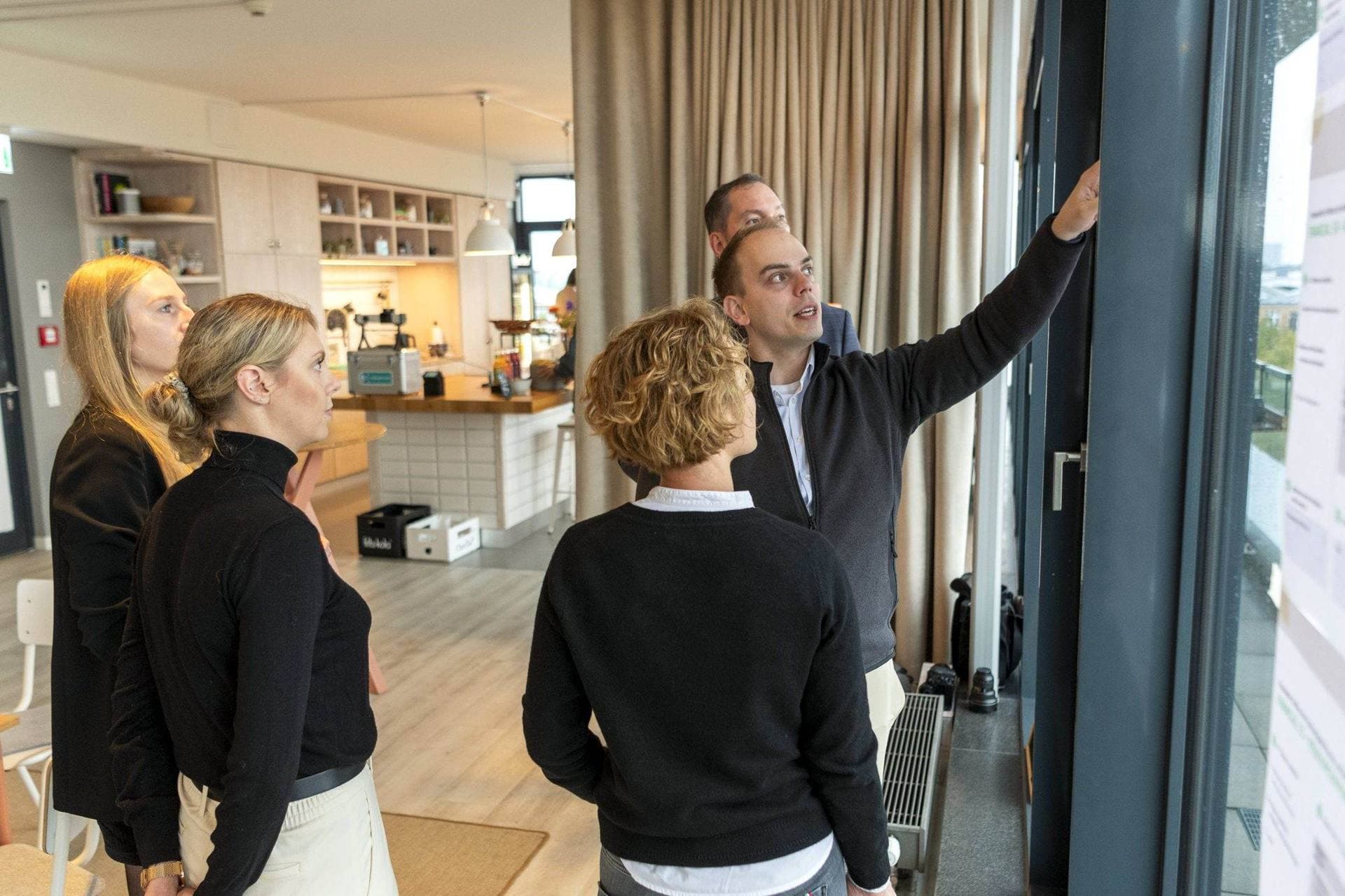
transformis group in front of a glass façade

Case study

Logo Currenta

Strategy development in a chemical park: from offering to customer value

A company-wide strategy process brought together market positioning, leadership and organisational design.

  • Five strategic alternatives, worked out together as a set of options.
  • A strategy review facilitated internally in 2016, with a refined strategic direction.
  • Step-by-step handover of strategy development and steering to the in-house corporate development team.
Read case study

Prefer to talk directly?

What decision are you facing? Together, we clarify your situation, the people involved and the right next step.

Jan-Niclas Bockard

Jan-Niclas Bockard

Director | Chief Operating Officer (COO) and Head of corporate strategy competence team

Your initial call

Let’s talk about your situation and what you want to develop in your organisation.

  • Your situation
  • What brings you to us
  • Possible next steps
Book an initial call