Fundamentals
Systemic organisational consulting: what it means
Systemic organisational consulting treats companies as social systems and looks at strategy, communication and decision-making together, not in isolation.
Read moreThe third mode explained: how the factual, social and time dimensions of a transformation architecture fit together, and why they are planned jointly.
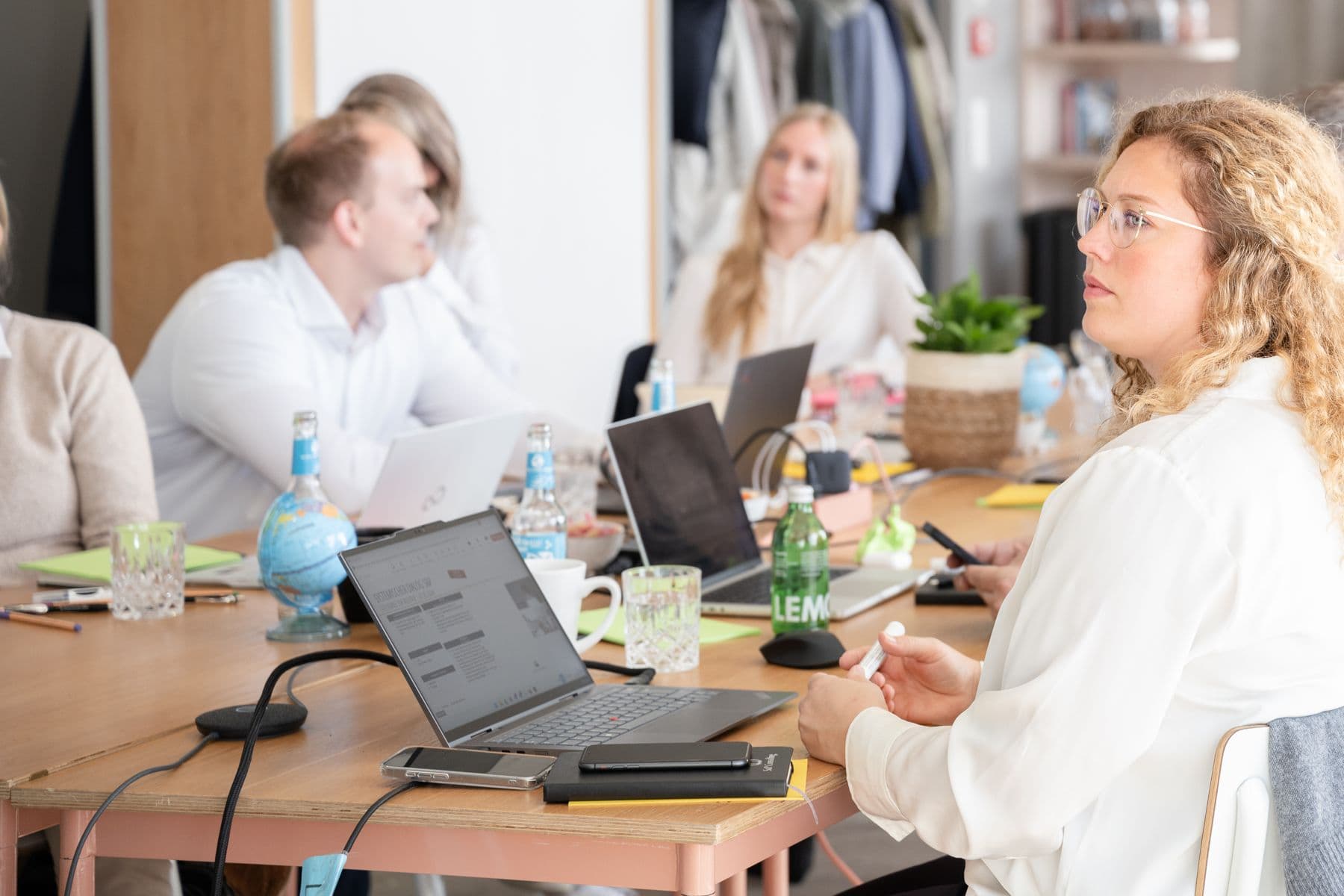
The third mode is part of the transformis approach to shaping change. It links the topics to be worked on with suitable forms of participation and a carefully considered sequence over time.
Classic expert consulting delivers a subject-matter solution and accompanies its implementation. The third mode of consulting differs fundamentally from this. It works on the substantive factual dimension and includes the social and temporal dimensions in the architecture on an equal footing from the outset. The three dimensions are coordinated and brought together.
The reason is experience from many change initiatives. Purely technical solutions are not enough, because changes usually fail at the social level and rarely at the factual level. A concept that is convincing on its merits stays in the drawer if it finds no connection in the leadership system. In the third mode, therefore, a development process emerges that enables decisions and has an effect in the organisation.
The effort is worthwhile for initiatives whose course cannot be predicted or planned in a linear way. Profound changes usually affect several dimensions at the same time, such as strategic direction, structure, communication and decision processes, leadership and culture. Interactions arise between them that cannot be mapped causally. The architecture therefore includes a process of reflection on its own course. The state of development is checked again and again during the process, and the next steps are derived from this. The approach is iterative.
Strategic questions, organisational design, leadership or culture may be affected at the same time. The architecture makes visible which topics are connected and which decisions are required at each step.
Relevant expertise must find its way into the joint work. At the same time, clear roles and decision-making authority are needed. Not everyone works on every question. Participation is justified by the assignment and the topic.
Diagnosis, options, decisions and implementation need a meaningful sequence. Insights from one step can change the planning of the next. Reflection creates the basis for this adjustment.
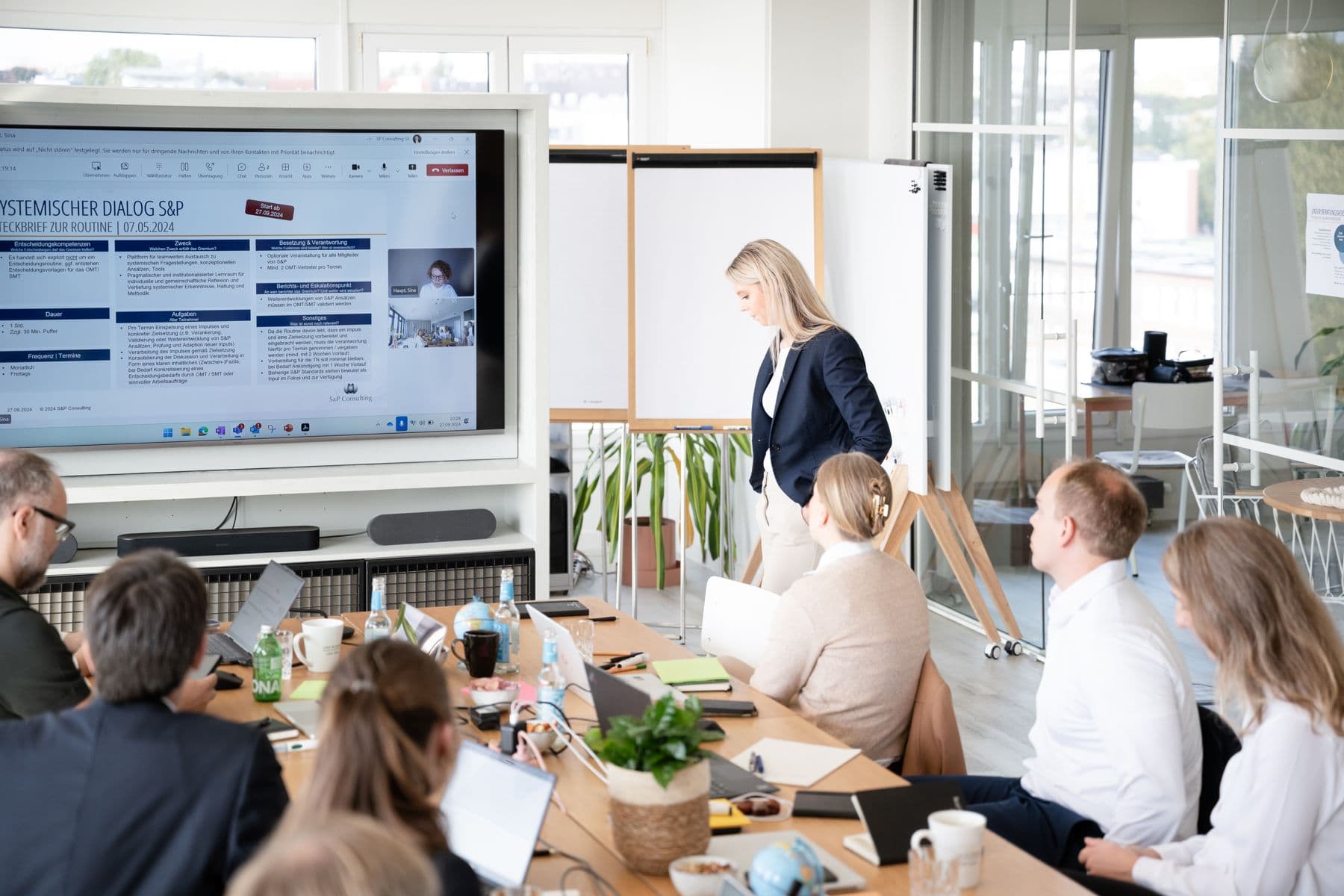
In the factual dimension, a task-related problem is worked on in order to secure or further develop the organisation's performance. In the social dimension, the quality of cooperation and the decision-making capacity of a team or of the wider communication develop further. This happens indirectly, i.e. through work on the subject matter.
The temporal dimension observes and shapes the development of the company over time. It coordinates the different time horizons of the various areas of work. It is meant to prevent the organisation from being over- or under-steered. In the decision process, it ensures a careful balance of acceleration and deceleration.
We work with facilitated sessions and jointly accepted minutes. These record the progress achieved. Preparation for further work takes into account observations and feedback from the organisation.
In the third mode, the consultants have a comprehensive picture of the subject matter, the process and the social dynamics in the organisation. The subject matter is not separated from the social dynamics in the work situation. A disturbance in the social system therefore does not need a separate format. Work on the subject matter is used to change the way people work together as well. Identified disturbances take priority, provided those involved allow it.
The work takes place in a consulting system. This is a specially created social structure in which client and consultants come together. Assessments, interventions and solutions are developed there jointly and on an equal footing. They need the interaction of insiders and outsiders, because both sides bring their own possibilities and limits.
In the DVVision programme, the work and reflection teams were staffed with an average of ten people, including employees and managers from all hierarchical levels and two consultants. Programme management observed and evaluated the course of the programme and continuously developed the overall architecture. Separate process architectures were created for the individual strands of topics and adapted to developments at the factual and social levels.
The interventions ranged from joint leadership retreats and cross-departmental feedback and evaluation formats to the introduction of new decision routines. The management board regularly reflected in a separate meeting on the effect of the interventions and on its own role in the process. Reflection was thus part of steering.
Change is neither a pure instruction from above nor an undirected collection of ideas. In the third mode, strategic orientation and the experience of the organisation are linked in a context that can be worked on. The DVVision programme used new communication and decision routines for this. They were prepared, introduced with support and later carried out independently in the line organisation.
The case shows that participation needs a working format with a mandate and feedback. Those who work on a question together must know what has already been decided and what can still be decided. Leadership remains responsible for direction and resources. Departments contribute their knowledge of practical consequences. The exact architecture depends on the task and the organisation.
Strategic orientation with knowledge and experience from the organisation.
Management, with a clear decision-making mandate.
They work on open questions with their knowledge of the actual work.
Routines were introduced and later carried independently by line management.
Fundamentals
Systemic organisational consulting treats companies as social systems and looks at strategy, communication and decision-making together, not in isolation.
Read more
Fundamentals
Transformation as organisational development: how strategic self-renewal connects with structures, culture and leadership.
Read more
Fachartikel
Organisational resilience meaning: how companies pick up signals of change, deal with shifting conditions and actively shape their own development over time.
Read more