
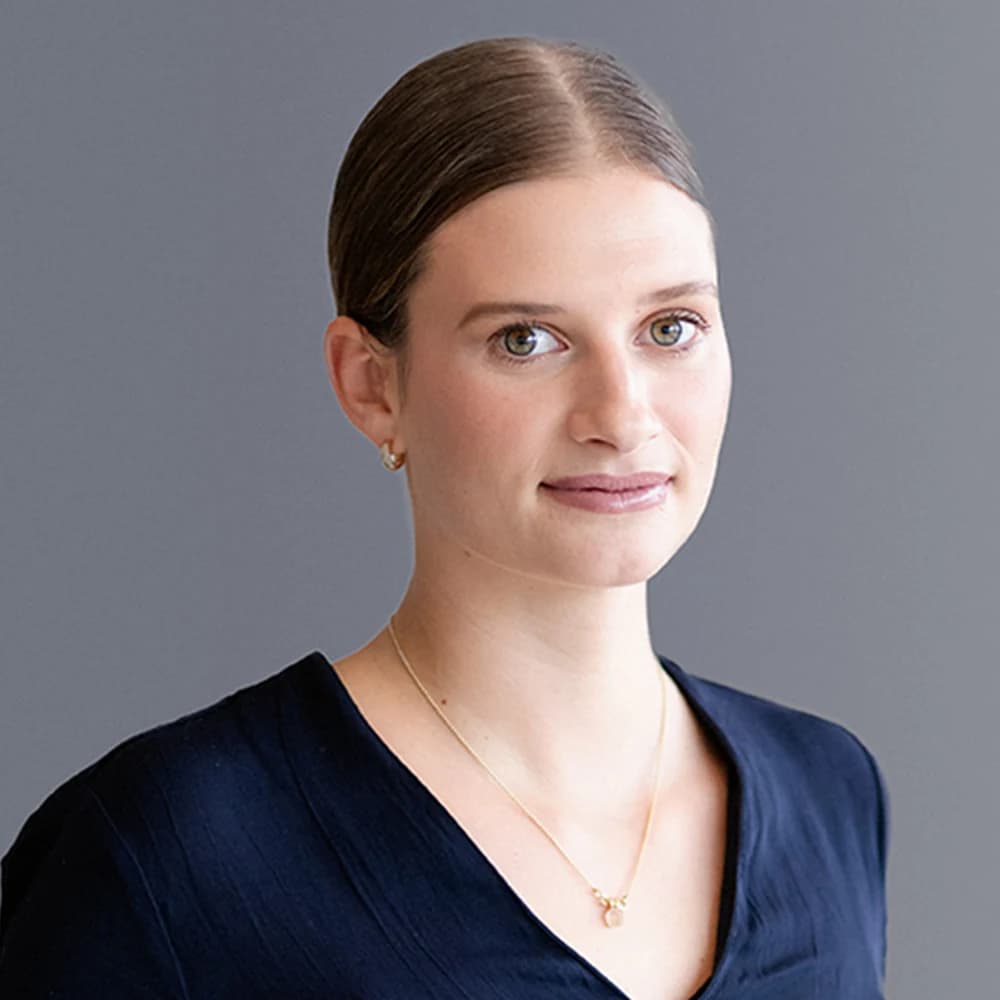
Laura Wruck
Head of Values and Corporate Culture competence team | Senior Project Manager | Business mediator
Culture in transformation
Strengthen your decision-making culture through suitable structures and the way people really work together.















When relevant information does not reach decisions, or agreed steps trigger no follow-up decisions, the way a team decides together is a good place to start. Smart Decision Culture brings leadership, communication and culture together to build a better decision-making culture.
Look at a relevant decision and the people involved.
Analyse information, expectations and team dynamics.
Define preparation, participation and responsibility more clearly.
Reflect on follow-up decisions and their effect in day-to-day work.
We take a real issue and trace what information was available, which views were heard and how the decision was reached. We also look at what actually happened after the decision.
Differing interests and conflicting goals are part of leadership. Suitable structures and forms of communication help to work through them before a decision is made. Informal expectations are taken into account where they help or hinder the exchange.
A good decision also needs an organisation that can make sensible follow-up decisions.
A decision has to take effect in later tasks and decisions, so responsibility, next steps and feedback are planned in from the start. Reflecting together shows what the team should develop in the way it makes decisions.
Book an initial callSmart Decision Culture looks at the organisation, the individual and the team. At the organisational level, communication and decision routines shape which options are considered at all. Cultural rules of the game can take effect even though nobody has explicitly agreed on them. At the individual level, experience and affective judgements flow into decisions alongside analytical considerations.
In teams, these perspectives meet. Together with managers, we examine specific decisions: Which information was seen, which alternatives were rejected, who was involved and which unspoken expectations determined the course? This turns the abstract wish for “better decisions” into a question about observable patterns. The practical core is joint reflection on decision situations.
Organisations are communication systems in which follow-up decisions are particularly important. A single right choice is of little help if the organisation does not carry it into further decisions and actions. We therefore look at the quality of cooperation in the management team: are factual differences discussed openly, is relevant knowledge from other functions brought in, and are responsibilities clarified after the decision? Cultural premises cannot be ordered directly, but formats for preparation, discussion, decision and review can be designed.
Managers can, for example, determine when a dissenting perspective is explicitly sought and who checks whether decisions connect with everyday work. These steps are developed on the basis of the specific leadership mandate. The result is a more conscious decision-making practice, not a promise that every decision will prove right in hindsight.
Den Entscheidungsmodus passend zur Aufgabe wählen: Die Wahl des Verfahrens hängt unter anderem davon ab, wie wichtig fachliche Lösungsqualität und Akzeptanz für die jeweilige Entscheidung sind. Routinefragen benötigen andere Verfahren als Expertenfragen oder Entscheidungen, deren Umsetzung breite Beteiligung voraussetzt. Wir unterscheiden Routine-, Gruppen-, Experten- und Konsensentscheidungen. Für konkrete Fälle wird geklärt, welches Wissen einfließen muss, wer beteiligt wird und wer entscheidet.
Arbeitsergebnisse: Nachvollziehbare Entscheidungswege; Geklärte Beteiligung und Rollen; Verbindung von Beschlüssen und Folgeentscheidungen.
Together we choose a relevant decision, the people involved and the criteria for reflecting on how they worked together.
A decision does not arise in one person alone. Organisational routines determine which information is considered relevant and who is involved in a question. People bring in their own experiences and judgements. In the team, different perspectives must be worked through in such a way that a viable choice and subsequent follow-up decisions become possible.
Organisational culture is an undecidable decision premise: established rules influence behaviour even though they were never officially adopted. If a manager violates such a rule, the reaction from the organisation can be stronger than expected.
We therefore look at concrete chains of decisions. What was the initial decision, which follow-up decisions were not made, and which cultural expectation played a role? Together with those responsible, we design the conditions that can be influenced: preparation of a decision, room for dissenting arguments, clear responsibility and a review of implementation. The result is not a promise always to decide correctly under uncertainty. It is a more conscious practice in which decisions and their consequences can be observed, discussed and improved.
With a specific decision, we therefore do not only ask about the outcome. We look at which alternatives were conceivable at all, which information was excluded and who had to carry the follow-up decision. The organisation learns when it can also examine the conditions of an unsatisfactory decision without hastily isolating the responsibility of a single person. This perspective gives rise to changeable routines for preparation, discussion and review.
Smart Decision Culture views decision-making capability as the interplay of individual prerequisites and organisational conditions. A joint decision can get stuck in everyday work if those involved have different expectations regarding responsibility, pace or risk. We therefore do not only examine the visible outcome of a meeting. What also matters is which information was taken into account, where dissent could be discussed and how implementation is followed up afterwards. The work can begin with a decision that is actually pending.
Those involved describe which rules help them and which lived routines make a decision more difficult. From this, suitable forms of preparation, discussion, resolution and follow-up can be developed. The result is a verifiable change in decision-making work, not a blanket judgement as to whether an organisation has a “good” or “bad” culture. This includes the question of how a decision is passed on to those who implement it in everyday work.
An approach for examining and developing the conditions under which individuals, teams and organisations make decisions. It works on three levels: in the organisation, communication and decision routines shape which options are considered at all; in individuals, experience and emotional judgements play a part; in teams, these perspectives meet.
No. The organisation’s routines and cultural expectations shape decisions too, even if nobody ever agreed on them. With leaders, we examine real decisions: what information was seen, which alternatives were dropped, who was involved and which unspoken expectations steered the outcome? The wish for better decisions becomes a question about observable patterns.
No. What can be designed are formats for preparation, discussion, decision and review; their cultural effect is then observed. Leaders can set when a dissenting view must be actively sought and who checks whether decisions carry through into daily work. The decision mode is also matched to the task: routine, group, expert or consensus.
In concrete decisions, in whether the relevant perspectives are involved, and in the follow-up decisions. One right choice achieves little if the organisation does not carry it into further decisions and action. The result is a more deliberate decision-making practice in the management team, not a promise that every decision will look right in hindsight.
What decision are you facing? Together, we clarify your situation, the people involved and the right next step.
Head of Values and Corporate Culture competence team | Senior Project Manager | Business mediator
Let’s talk about your situation and what you want to develop in your organisation.