Skip to content

Strategy in transformation

Market positioning from the customer’s perspective

Market positioning from the customer’s perspective: connect target customers, value proposition and the capabilities you need into a lasting strategic position.

Market positioning from the customer’s perspective
  • Siemens
  • Porsche
  • Bayer
  • BASF
  • Henkel
  • Sony
  • Metro Group
  • McDonald’s
  • E.ON
  • Dräger
  • Sennheiser
  • Schüco
  • WIKA
  • Currenta

Market positioning becomes concrete once it is clear which customers a company wants to serve and with what benefit. transformis links the work on this decision with its consequences for processes, organisation and capabilities. Different strategic lenses help test options and trade-offs.

What you come away with

  • Distinct positioning options
  • A clearly defined value proposition for target customers
  • Organisational prerequisites for the chosen direction

How we work

  1. 01

    Understand segments

    Capture customer expectations and benefit criteria from the outside in.

  2. 02

    Make the choice

    Match target groups and a suitable generic strategy with your own capabilities.

  3. 03

    Sharpen the promise

    Describe threshold benefit and differentiation for each segment.

  4. 04

    Deliver

    Align portfolio, processes and relationships with the chosen positioning.

Test customer expectations and existing assumptions

We start from the relevant customers and what they expect. Internal convictions are separated from tested insights. Where needed, we bring in customer segmentation to make differing needs clear.

Distinguish strategic options

Low cost, outstanding product performance, an attractive ratio of total cost to benefit or individual customer solutions can point in different directions. We match the options against your situation and capabilities. The chosen value proposition needs a clearly named customer context.

A distinctive combination of benefit criteria is what makes a position stand out in customers’ eyes.

Work out the organisational consequences

The positioning sets requirements for core processes, collaboration, capabilities and decision-making authority. We define these prerequisites together with the people responsible, and further implementation is aligned with the strategic priorities.

Book an initial call

Who the company creates distinctive value for

A positioning must start from the customer’s point of view. Different customers do not seek the same benefit. Looking only at product categories or competitors easily leads to interchangeable offerings. We therefore examine the benefit expectations of chosen segments and connect them with the company’s core competencies. Customers should be able to see why this particular offering suits their task.

Read more

Five basic strategies serve as a frame of orientation: cost leadership, product leadership, price-value strategy, customer intimacy and system lock-in. The choice is not a labelling exercise. For each target segment, it is examined which service promise follows from it and whether the organisation can actually deliver on it. With customer intimacy in particular, the relationship, service and processes often change too, not just the advertising copy.

Decide threshold benefit and differentiation separately

A value proposition consists of the product and service portfolio, time, quality, price, service, relationship and brand. Each segment expects a minimum level on these criteria. If the threshold benefit is not reached, an offering is ruled out or creates dissatisfaction. If more than expected is offered everywhere, this ties up resources without corresponding value from the customer's point of view.

Read more

We therefore examine where the minimum requirement must be met and where a special combination creates a distinctive promise. The leadership team decides which target groups take priority and what consequences this has for sales, service delivery and investment. A robust market positioning is thus a choice that includes forgoing something. It must be recognisable to customers and manageable for employees in everyday work.

Operational Excellence über Prozesse, Zusammenarbeit und Wertbeitrag denken: Operational Excellence lässt sich als Zusammenspiel von Prozessausrichtung, disziplinierter Zusammenarbeit, integrierten Systemen und klaren Wertkriterien beschreiben. Die Darstellung verknüpft diese Perspektiven mit dem Ziel, den Gesamtaufwand zu verbessern und Wertbeiträge konsequent zu beurteilen.

Arbeitsergebnisse: Unterscheidbare Positionierungsoptionen; Konkretisiertes Nutzenversprechen für Zielkunden; Organisatorische Voraussetzungen der gewählten Richtung.

The strategy models we use give the work structure. Which market and customer data is needed is decided according to the decisions to be made.

There are five basic strategies with different ways of building customer loyalty. Cost leadership works primarily with a low price. Product leadership promises a special performance. The price-value strategy combines an attractive mix of services with low total costs over the period of use. Customer intimacy tailors an individual solution to a customer's situation. System lock-in requires special preconditions.

None of these labels is in itself a positioning. For a chosen segment, it must be shown what expectations it has, how the company's own offering meets them and which capabilities are needed. The seven benefit criteria of Innovative Customer Segmentation (IKS) help to make this concrete. For example, a relationship with fixed contact persons can differentiate more strongly for one segment than an additional product parameter. Another group places more value on response time or price.

The leadership team decides which combination the company can offer and reliably deliver. This often results in different requirements for sales, service and internal processes. The positioning is therefore translated not just into a message, but into decisions about the offering and the organisation.

In conversations with those responsible, the positioning is examined for contradictions. Can the company promise maximum individualisation and consistent standardisation at the same time if the same resources are to deliver both? Which target group takes priority when capacity is scarce? This calls for clear priorities in day-to-day business. Such decisions make a market positioning understandable for employees. They also show what the company deliberately forgoes so that a chosen promise remains credible.

The path has four steps: market assessment, customer segmentation, strategic positioning and strategy map. We distinguish market segments from customer segments and link their assessment to decisions on target markets, target customers and value propositions. We define comparable criteria for the market assessment and test them using existing studies and conversations with company representatives and experts. The customer perspective clarifies minimum expectations and possible differentiation. Only then is it decided which core competencies support the chosen position and which processes it needs in the business. This sequence prevents a wording for external communication from taking the place of a strategic choice.

The result can be made visible in a strategy map with objectives for customers, processes, learning and economic impact. The map also makes the chosen positioning understandable as a shared task for the units involved. Its effect is checked in customer conversations and in implementation.


Frequently asked questions

Is positioning just a new slogan?

No. Positioning describes a strategic choice of target segments and has to show up in what you deliver and how you are organised. Looking only at product categories or competitors easily leads to interchangeable offers. Five generic strategies serve as a frame of reference: cost leadership, product leadership, price-value strategy, customer intimacy and system lock-in. With customer intimacy in particular, relationships, service and processes change, not just the advertising copy.

Why might two segments need different promises?

Their expected benefits and behaviour can differ considerably. We therefore examine what selected segments expect and connect this with the company’s core capabilities, bringing in customer segmentation where needed. Customers should be able to see why this particular offer suits their task better than a comparable one.

What is threshold benefit?

The minimum level a segment expects on a benefit criterion: portfolio, time, quality, price, service, relationship or brand. Fall below it and an offer is ruled out or causes dissatisfaction; offer more than expected everywhere and you tie up resources without matching value for customers. Differentiation only arises above this threshold, through a distinctive combination.

How is the choice tested?

Against what customers really expect, your own capabilities and whether the business can deliver on it. The leadership team decides which target groups take priority and what that means for sales, delivery and investment. A robust market position means choosing and also giving things up; it has to be recognisable to customers and workable for employees day to day.

In practice

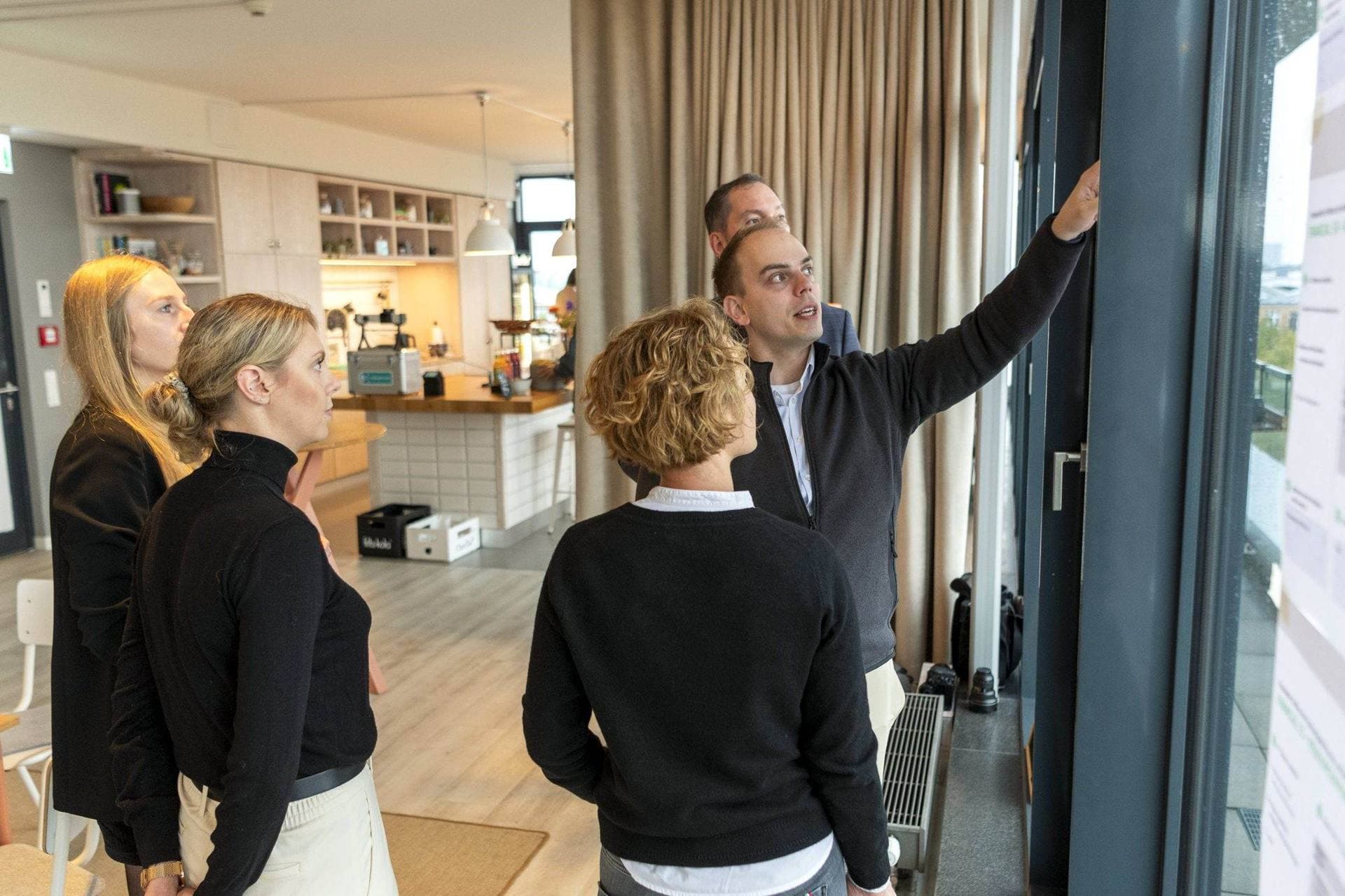
transformis group in front of a glass façade

Case study

Logo Currenta

Strategy development in a chemical park: from offering to customer value

A company-wide strategy process brought together market positioning, leadership and organisational design.

  • Five strategic alternatives, worked out together as a set of options.
  • A strategy review facilitated internally in 2016, with a refined strategic direction.
  • Step-by-step handover of strategy development and steering to the in-house corporate development team.
Read case study

Prefer to talk directly?

What decision are you facing? Together, we clarify your situation, the people involved and the right next step.

Jan-Niclas Bockard

Jan-Niclas Bockard

Director | Chief Operating Officer (COO) and Head of corporate strategy competence team

Your initial call

Let’s talk about your situation and what you want to develop in your organisation.

  • Your situation
  • What brings you to us
  • Possible next steps
Book an initial call