
Embedding sustainability in the organisation
How separate initiatives became a jointly managed cross-functional task.
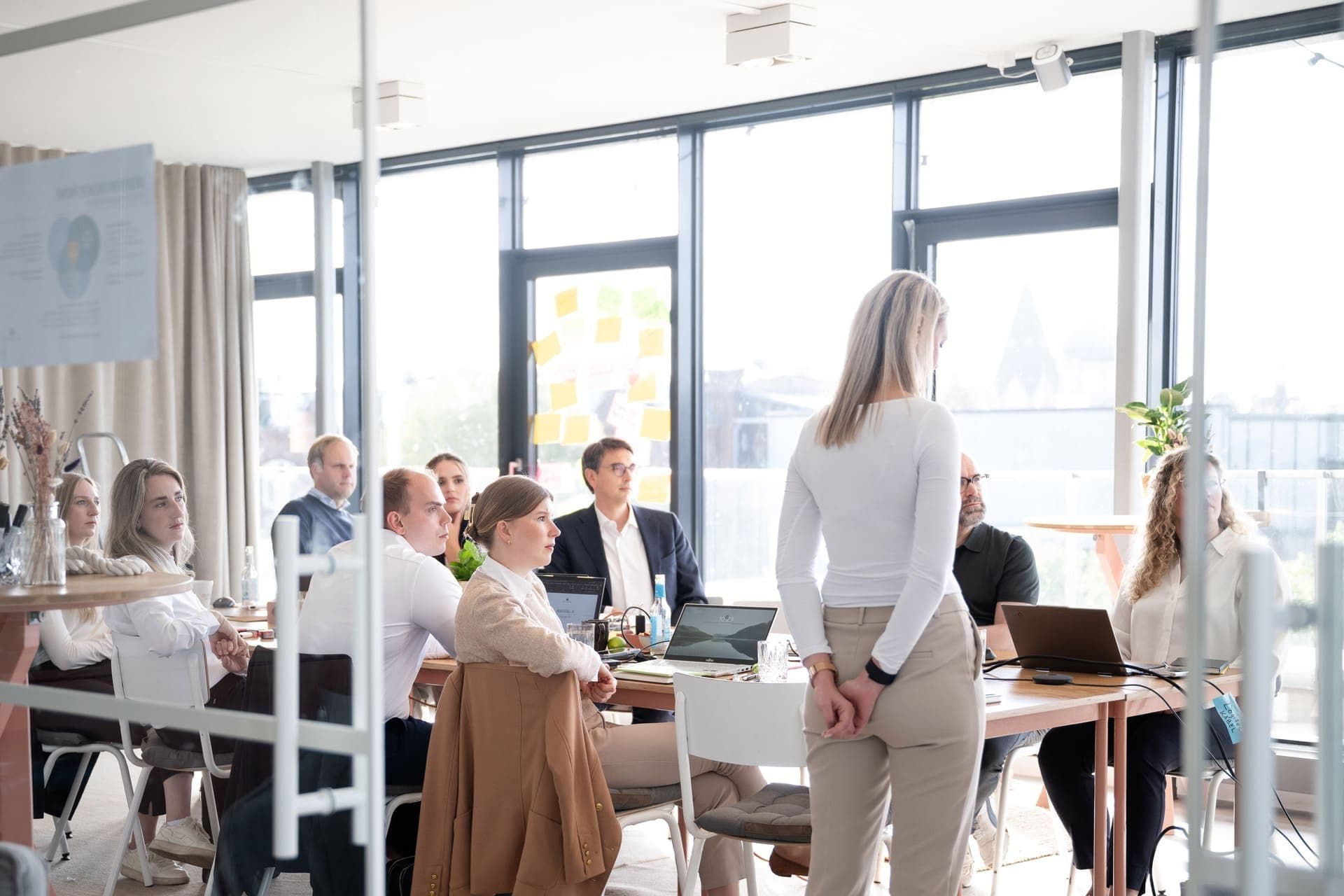
- Fields of action
- Organisational development, Strategy development
- Topics
- Strategy & future, Organisation & collaboration
- Services
- 3 services involved
- Foundation
- Project documentation
The journey at a glance
01Stocktake
comparing activities with requirements
02Positioning
setting guardrails for the work
03Governance
connecting the core team and departments
04Implementation
turning priorities into work with clear ownership
05Learning
organising knowledge and exchange for the long term
A technical B2B wholesaler (PVH) wanted to embed sustainability as a permanent, cross-functional responsibility. Existing initiatives, external requirements and differing priorities had to be brought together into one joint effort. The task combined strategic positioning, clear responsibilities and collaboration between departments.
Stocktake: comparing activities with requirements
Interviews with the heads of the business units captured existing activities. A market analysis added customer, supplier and wider market perspectives. According to the report, sustainability data from 71 suppliers and 30 customers was screened and evaluated. A subsequent gap analysis showed the differences between current activities and the departments’ requirements.
Positioning: setting guardrails for the work
The sustainability positioning was tied to the company’s vision of the future, distinguishing mandatory topics from additional ambitions. The concept defined the tasks of the departments and the sustainability function, along with communication and decision-making routines for the work ahead.
Governance: connecting the core team and departments
The core team brought together the CEO, the sustainability function and the external consultants. It set the framework, made decisions on direction and resolved conflicting goals where necessary. A cross-departmental communication and advisory platform connected the people responsible in each department, creating a regular forum for topics, dependencies, work packages and pending decisions.
Implementation: turning priorities into work with clear ownership
Clear levels of ambition in the target picture guided prioritisation. Key departmental measures were coordinated and monitored in focus projects defined each year. Operational responsibility lay with the employees carrying out the work; the platform and the sustainability function helped keep everything in sync.
Learning: organising knowledge and exchange for the long term
The documented results include a digital knowledge platform on the intranet and a sustainability glossary specific to the organisation. In the core service areas, time slots were set aside in team meetings for regular exchange. This gave ongoing work on the topic a fixed place in day-to-day operations.
The question for your organisation
Which decisions need to be made centrally, which responsibilities belong in the departments, and how do new requirements feed back? The case helps clarify these questions when sustainability is to become a permanent part of how a company is run.
What the project documentation reports
- A clearer positioning with guardrails and prioritised focus projects.
- Established governance through a core team and cross-departmental collaboration.
- Institutionalised knowledge sharing with an intranet platform, a glossary and fixed slots in team meetings.
The screening of 71 suppliers and 30 customers indicates the scope of the analysis at the time; it is not an impact metric. The case documents organisational work. It does not show that emissions were reduced or that the company is legally compliant today.
The brochure for this case study
The full story with background, methods and results. We will send you the brochure on request.
Request the brochure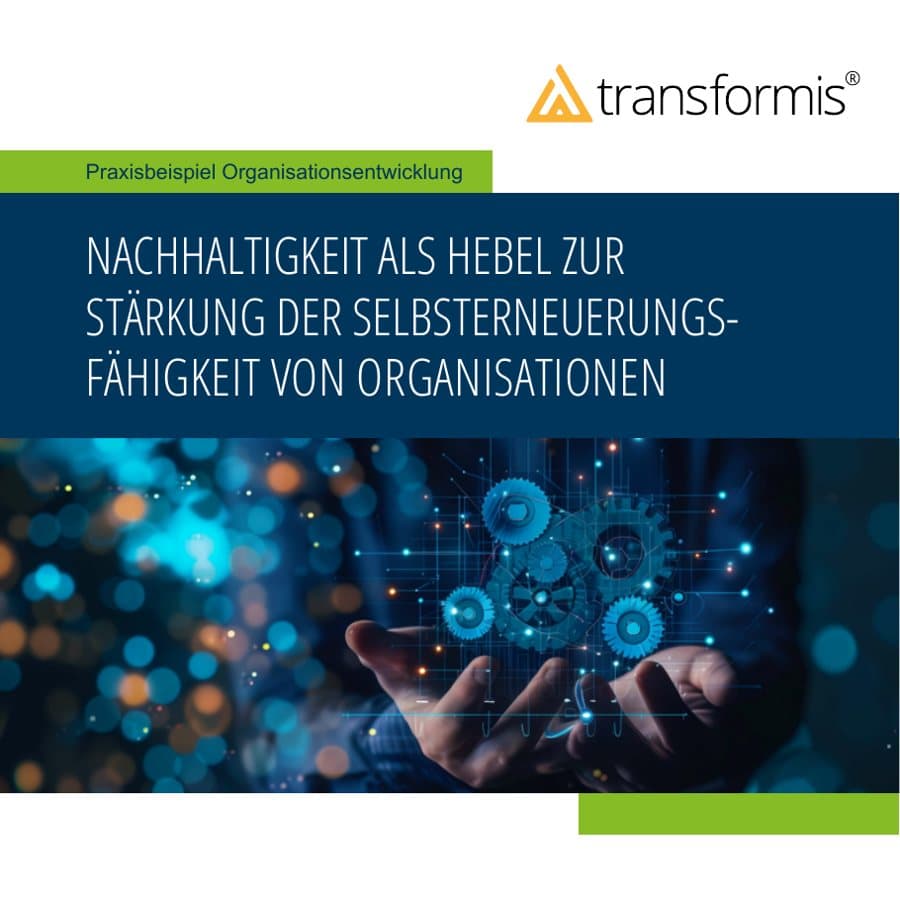
Praxisbeispiel Organisationsentwicklung
Sustainability as a lever for strengthening an organisation’s capacity for self-renewal
52 pages, PDF
Prefer to talk directly?
Facing a similar challenge? Let’s talk about your situation.
Your initial call
Let’s talk about your situation and what you want to develop in your organisation.
- Your situation
- What brings you to us
- Possible next steps