Fundamentals
What is organisational transformation?
Transformation as organisational development: how strategic self-renewal connects with structures, culture and leadership.
Read moreThe Zukunfts-Forum is a compact strategy format that helps leadership teams secure or realign their core business: process, results and success factors.

The Zukunfts-Forum (Future Forum) is a compact format for securing or realigning the core business. In three to six months, a leadership group and the relevant key players develop a viable strategic perspective without overloading day-to-day business. This article describes the situations the format is designed for, the results it delivers, how its four phases run, and the success factors and objections that come up in practice.
Many companies are under strategic pressure. New competitors are displacing established providers, technological change favours those who can make use of it, and changing customer expectations demand new services and business models. On top of this come sustainability requirements, regulatory demands and uncertain economic policy conditions. Those who wait too long fall behind.
There are organisations that are well set up for strategy work and pursue it continuously. More common are companies that are being challenged with unaccustomed intensity: markets that were served successfully for years are collapsing, the range of services is not yet sufficiently geared towards digitalisation or sustainability, and the behaviour of competitors and customers is making the previous positioning unattractive.
These companies are looking for orientation on what scope and focus of strategic work their situation calls for, who takes responsibility for the process and the content, and how the work can be organised efficiently alongside day-to-day business.
In the Zukunfts-Forum, companies develop new business areas and business models, arrive at innovative value propositions and service portfolios, and identify paths to new customer potential. They adapt their positioning to the dynamics of the market, find their way to a pragmatic sustainability strategy and define their route to securing future viability.
The result is more than a concept paper. It includes the commitment of the managers and key players who have to implement the strategic response. The process is tailored precisely and is meant to give the company more energy than it takes. This energy also has a direct effect on stabilisation measures in day-to-day business.
The process has a threefold benefit and builds on existing resources and core competencies. The first pillar is a viable strategic perspective for realigning the core business. As a rule it forms the main focus, because the forum is explicitly geared towards it. What is meant is strategy in the sense of a strategic picture of the future, which others also call a vision.
The second pillar is a clear view of the organisational development needs. New strategic options can rarely be tapped with existing competencies and resources. Clarity is therefore needed about development needs in terms of people, structures and finances. Many call this route description strategy; transformis calls it organisational development.
The third pillar is the stabilisation of the current core business. It is often underestimated and frequently arises as a side effect. Working on strategy together produces insights that also strengthen the current positioning and can be implemented in the shorter term. Participants experience how strategic work can become part of everyday leadership.
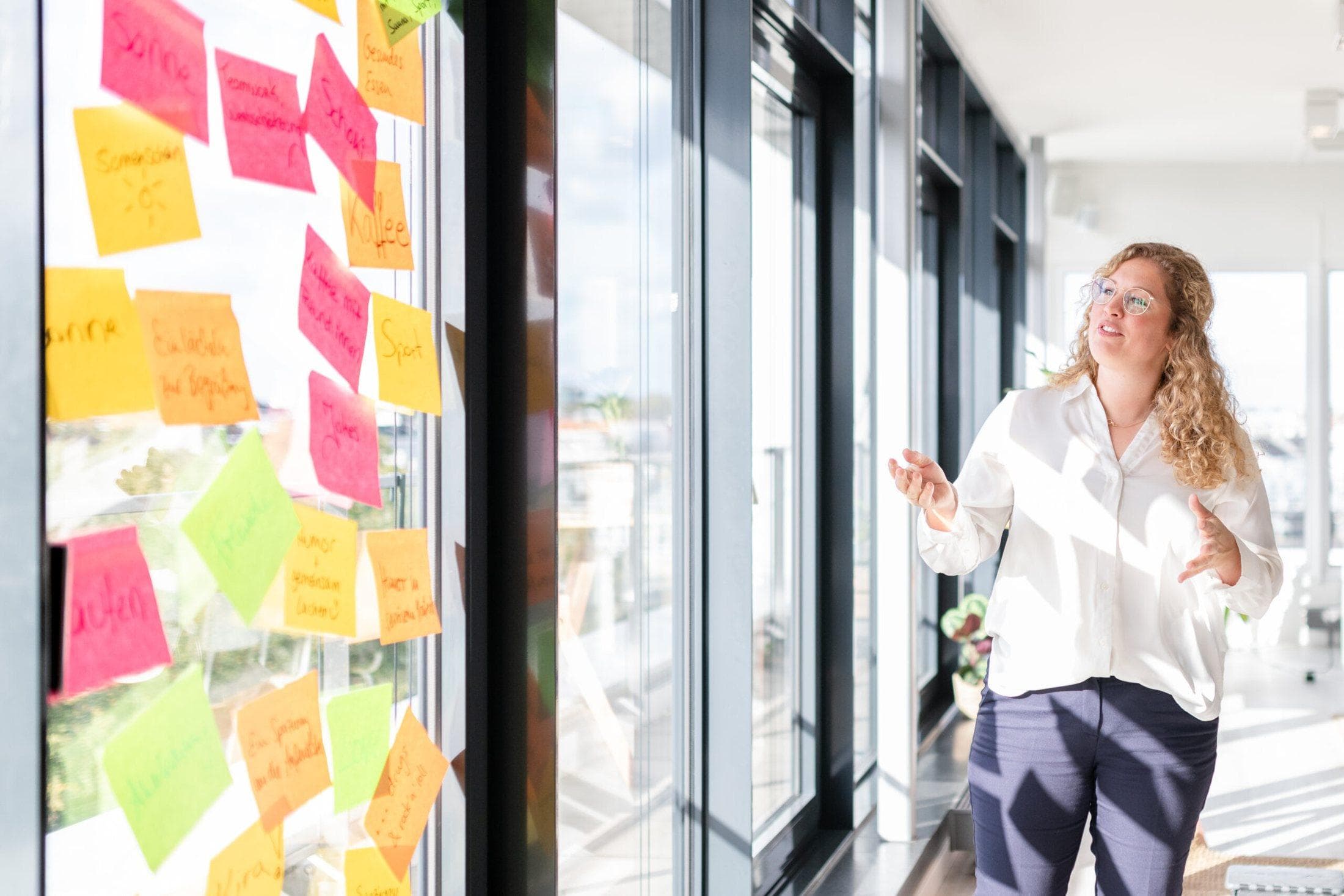
The Zukunfts-Forum runs in four phases, which are designed precisely and steered in an agile way. It takes three to six months. It begins with the kick-off, usually a compact two-hour in-person workshop. Together, the participants acknowledge the need and the pressure to act and take joint responsibility for the work process.
The impulse phase opens up thinking for strategic work. Various input formats, remote or hybrid, bring in impulses from external partners, each of which is processed immediately in a short sequence. The participants engage with dynamics, a diversity of perspectives and the value of networking and development.
The working phase consists of around four to five full-day workshops, supplemented by selective in-depth work in working groups. The participants' impulses are brought into explicit discussion and translated into concrete ideas for strategic development. The ideas are enriched in order to think big and broadly, then described and made concrete. This is followed by careful evaluation and condensation through to selection, and by the elaboration of strategic options.
The closing and transition phase prepares the results for the intended strategic milestone, brings about decisions and describes follow-up work such as explorations or projects. Resonance sequences, validation work in working groups and communication formats serve this purpose.
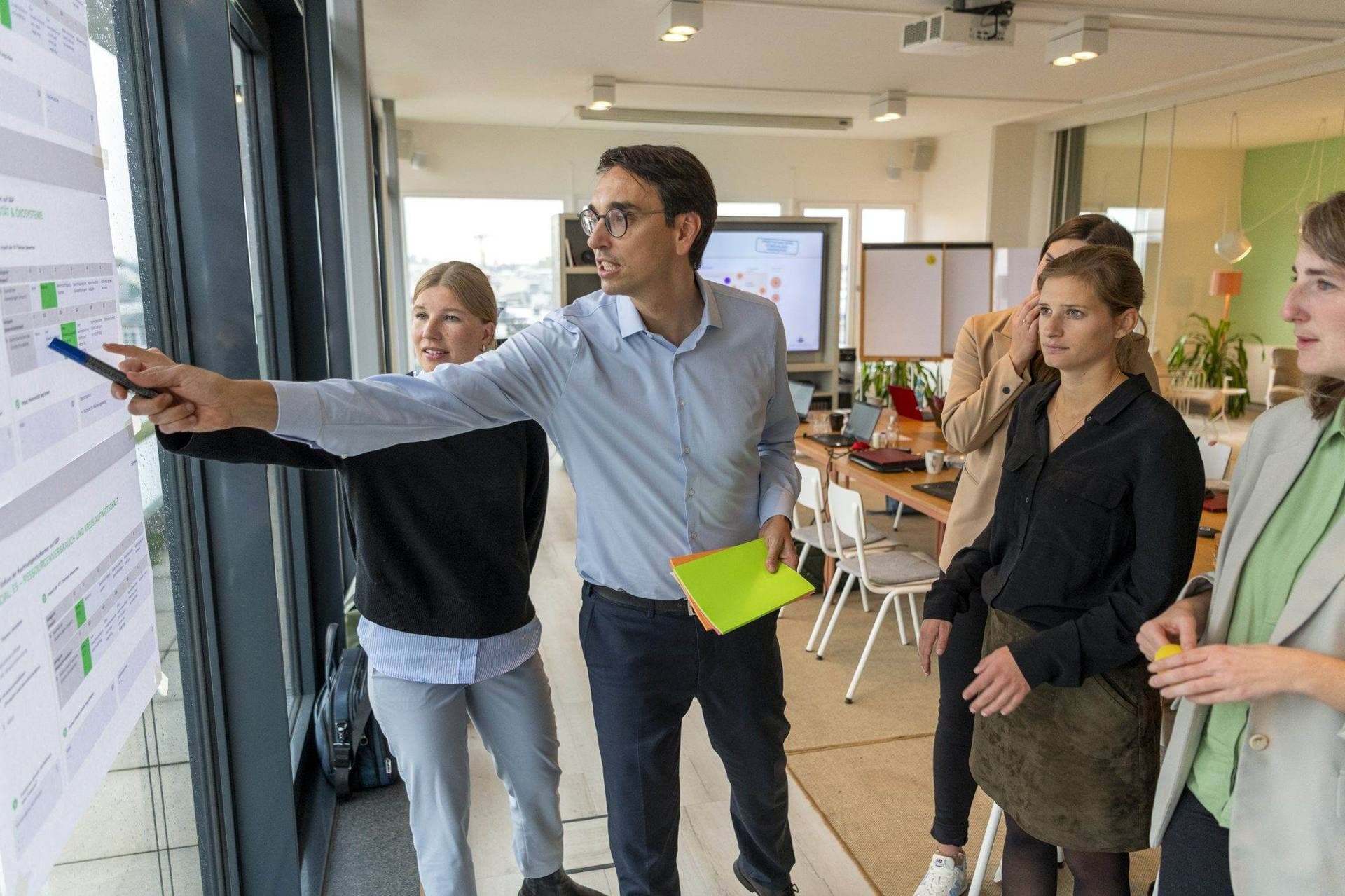
The format is targeted. Only what enables the company to take the next necessary step is developed. That may be a sound business case; often it is first of all clarity within the leadership group about the strategic options, prepared for a dialogue with investors or owners. It is pragmatic, because a few workshop sessions, enriched by carefully selected input sessions or in-depth work, form the basis. And it is compact: it takes bottleneck periods into account and can usually be carried out within six months.
The format is flexible, because the steering group can respond to new insights at any time and adapt working formats at short notice. Missing expertise is brought in, for example from trend and market research, associations or from the supplier and customer side. And it is collaborative by design: from the kick-off, all participants internalise the urgency, and at least the managers and key players make the necessary commitment.
The first premise is the right focus. It needs to be clarified whether the emphasis is more on securing earnings or on growth, in known, changing or new markets. Likewise, how broadly and deeply trends and markets are analysed, segmentations planned and options developed, and whether a clear picture of the future or a concrete market position is at the centre. Focusing on the relevant questions early and choosing suitable tools saves energy.
The second premise is the targeted involvement of expertise. Strategic work is not reserved for designated strategists. What matters is that external and internal expertise on markets and market conditions, as well as on the organisation's services and core competencies, feeds in, both as input and in the discussions. An organisation should meet the increased complexity of strategic tasks with “system intelligence”.
The third premise: insight must translate directly into action. Strategic work processes must lead those responsible to implement the insights consistently. This taking of responsibility must emerge and be strengthened within the process.
The first objection is that everyday operations leave no time. It is true that strategic work explicitly needs time and space. But it neither has to wait nor make excessive demands on time. A cleverly designed work process secures relevant contributions from valuable key players within manageable time windows.
The second objection is that there is no strategy department or suitable person. It is true that competence for strategic work is needed more than ever and should be developed. However, the work cannot sensibly be delegated to a strategy department; the challenges are too complex for that. The work process must involve key players from different functional units with expertise on the market and on organisational competencies. If necessary, the design of the process can be handed to external process experts who benefit from broad experience.
The third objection is that with such high dynamics nothing can be known, so waiting is the best alternative. It is true that nobody knows for certain how markets and individual players will develop. But waiting slows the organisation down and narrows its room for development. The task is to understand developments, set the course and sharpen it step by step. There is enough expertise in the market to turn uncertainty into well-founded hypotheses.
Strategy forums need a creative space for free, visionary thinking and a logic space in which interim results are evaluated, prioritised and selected. Selection can be painful, because even favoured topics remain behind for the time being in a deliberately created store. Four recommendations help: align work sequences and locations with the respective space, explicitly agree selection criteria together, reflect on the conflict of objectives at the meta level if necessary, and understand the forum as a cycle that follow-up cycles can build on.
Forums have their own technical, spatial and personnel requirements. Preferences in the communication culture need to be taken into account without forgoing helpful but unfamiliar practices. Anyone who brings diverse perspectives together sometimes has to overcome barriers of time, place, language or culture and should involve experienced facilitators. Depth brings emotional discussions with it. Friction is often a useful catalyst when experienced moderation channels the energy into productive work. Digital and analogue work can be combined; what matters is explicit dialogue.
Tailor-made canvas formats have proven their worth. A canvas can easily be adapted to requirements and guides the required breadth and depth in a structured way, including for individual work. It can be worked on digitally or on paper and is suitable for working groups or work stations. The visual structure provides orientation, while the flexible sequence leaves room for manoeuvre. A completed canvas usually already serves as documentation of the results.
Professional process steering takes three perspectives into account. In the factual dimension, the critical next milestone of the strategy work is identified and made the focus of the forum's objective. The breadth, depth and form of the work are tailored to the starting position and the framework conditions.
The social dimension is about effective participation and the taking of responsibility by the leadership system and relevant key players. The process is facilitated so that participants devote themselves openly and seriously to the matter at hand and power games, tensions or uncertainties do not impair the work.
In the time dimension, participants invest as little net time as possible and as much as necessary. In gross terms, the rhythm of the meetings supports the work steps and leaves room to reflect on and adjust the process planning along the way. In this way the format is geared towards its goals while conserving resources.
The Future Forum (Zukunfts-Forum) is a compact format with which managers and key players secure or realign the core business. It combines strategic results with the commitment of those responsible.
It runs for three to six months. The core is around four to five one-day workshops, supplemented by input formats and in-depth work in working groups.
It delivers a viable strategic perspective, a clear view of the organisational development need and contributions to stabilising the current core business.
No. Strategic work needs key players from different functions with market and organisational knowledge; external process experts can take on the process design.
Fundamentals
Transformation as organisational development: how strategic self-renewal connects with structures, culture and leadership.
Read more
Fachartikel
Organisational resilience meaning: how companies pick up signals of change, deal with shifting conditions and actively shape their own development over time.
Read more
Fachartikel
Leadership as an organisational function: how roles, expertise and the six tasks of the leadership wheel turn uncertainty into shared decisions.
Read more