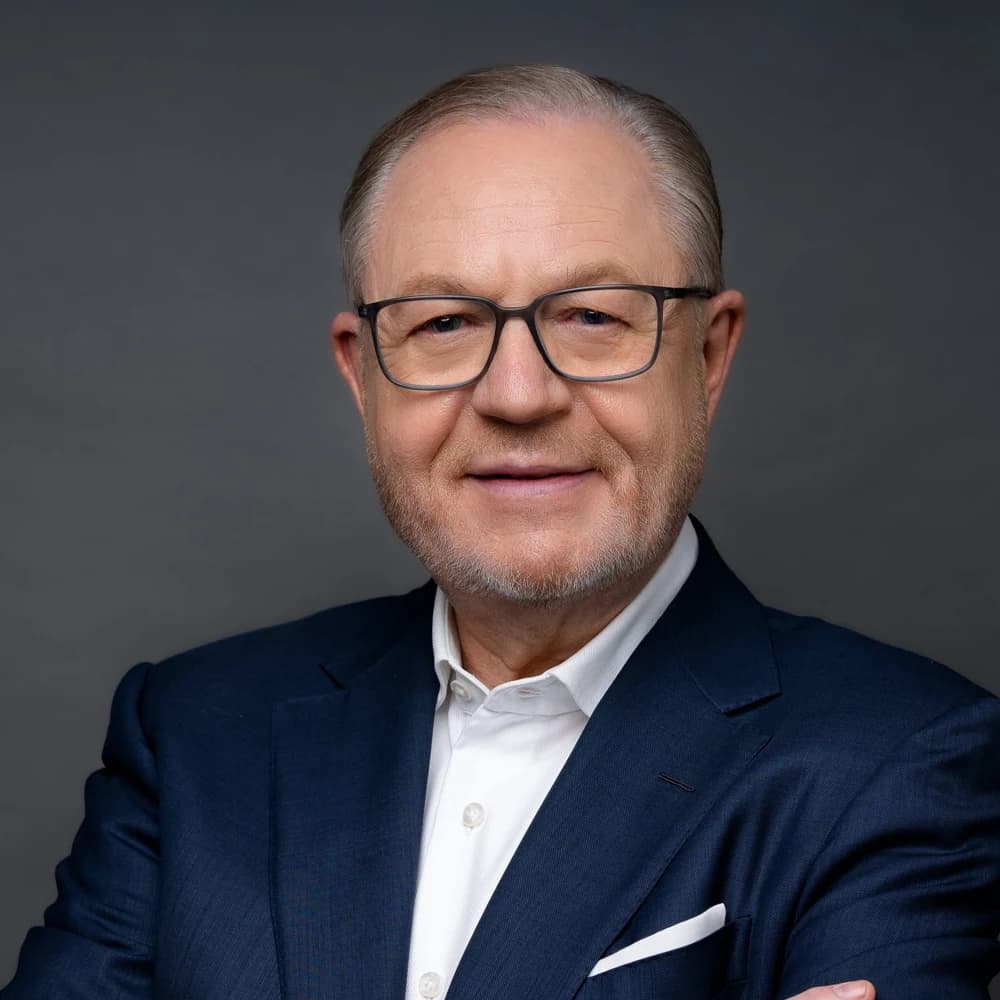
Robert A. Sedlák
Founder and CEO transformis Consulting SE | Guest Professor ECNU Shanghai | Certified Business Mediator (German Mediation Act) | Head of the Family Businesses competence team
Succession in transformation
Clarifying owners' interests and preparing shareholders for their responsibility towards the company.












Ownership connects the business family with the company but follows its own logic: it is about shares, voting rights, responsibility for wealth and influence. A shareholder strategy becomes a topic when the interests of owners, family and management diverge, when the shareholder group changes, or when investment is held back because succession in ownership is unresolved.
Take in shareholders' expectations regarding growth, risk and distributions.
Discuss differing positions and formulate principles for the shareholder group.
Align guidelines on capital, withdrawals and investment with the strategy.
Qualify current and future shareholders in a targeted way.
We clarify with the shareholders what they expect of the company, for example regarding growth, risk, distributions and independence. Differing positions within the shareholder group are named openly rather than being fought out again and again in individual decisions. We also examine whether the owners agree on the fundamental questions and can present a united front.
A sound ownership strategy links the shareholders' interests with the company's requirements. Equity, liquidity, withdrawal policy and willingness to invest are aligned with the corporate strategy. The aim is agreements that keep the company competitive and give the shareholders orientation.
In a family business, ownership is a responsibility with its own logic that needs to be shaped deliberately alongside family and management.
Shareholders need knowledge of strategy, organisational design, family governance, conflict dynamics and succession in order to fulfil their role. Shareholder qualification conveys these connections and builds the competences that follow from each person's actual shareholder role. This applies in particular to the next generation, who take on ownership without necessarily holding operational responsibility.
Book an initial callIn a family business, individuals often belong to several systems at once: as a family member, as a shareholder and in management. Each system has its own idea of fairness. In the shareholder group, equal access to information applies and votes follow the size of the stake. In the family, equal treatment tends to be expected; in the company, performance counts. Anyone who fails to separate these levels carries family issues into the shareholders' meeting or ownership issues into operational management.
We therefore work with the shareholders on the question of which decisions belong in which body. Transfer of ownership and change of leadership need not coincide, but they require a coordinated approach. Where boards exist or are to be created, we clarify their role in relation to the family and management.
When shares pass to the next generation, balances of influence and expectations change. Settled inheritance arrangements, effective controlling and a clarified economic framework are among the prerequisites for the company to remain able to act after the outgoing generation steps back. We show which of these prerequisites are in place and where decisions by the shareholders are still missing.
Our service portfolio describes shareholder qualification as a programme of around twelve months. It combines corporate strategy aligned with family governance, organisational design, dealing with conflict, differing basic attitudes in business families and the dynamics of a family business. Content and depth depend on the role that individual shareholders actually take on.
Deliverables: Clarified owners' interests and shared principles for the shareholder group; Agreed guidelines on withdrawals, investment and capital structure; A qualification plan for current and future shareholders.
Corporate, inheritance and tax law structuring, company valuation and transaction advice are matters for the relevant specialists. We clarify interests, roles and the basis for decisions and coordinate the results with them. Advisory board consulting is not included as a matter of course.
The shareholders themselves, supplemented where necessary by management and future owners. Whether family members without shares are included is decided at the outset, because it determines which questions can be discussed in the group.
Advisory board work is not listed as a separate service in our service catalogue. The role of an existing or planned board can, however, be part of the clarification if it concerns the interplay between shareholders, family and management.
They are handled by the relevant lawyers, tax advisers or auditors. We first clarify the shareholders' interests and principles so that the specialists can build on a common line, and we coordinate with them throughout the process.
What decision are you facing? Together, we clarify your situation, the people involved and the right next step.
Founder and CEO transformis Consulting SE | Guest Professor ECNU Shanghai | Certified Business Mediator (German Mediation Act) | Head of the Family Businesses competence team

Let’s talk about your situation and what you want to develop in your organisation.