Fundamentals
Systemic organisational consulting: what it means
Systemic organisational consulting treats companies as social systems and looks at strategy, communication and decision-making together, not in isolation.
Read moreWaiting times, duplicated work and coordination effort tie up time and resources. How to use them as starting points for developing your organisation.
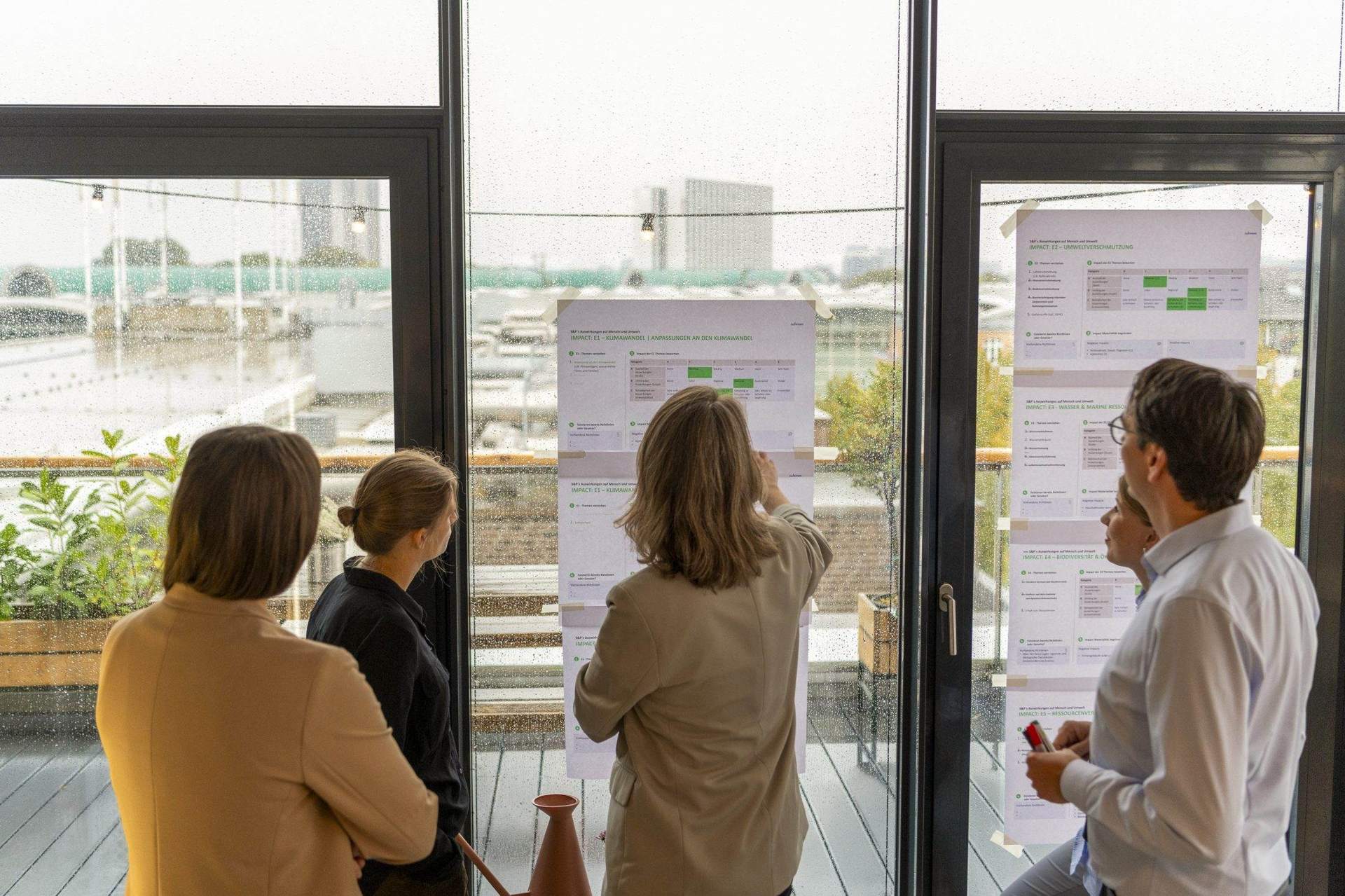
Organisational friction ties up time and resources. Working on performance and value-creation potential is a field of action in its own right. It means looking at concrete workflows together with their structural conditions.
A value stream comprises all activities, material and information flows needed to produce and deliver a product or service for a customer. It consists of value creation and waste. Only activities that increase the value of the service and for which the customer is willing to pay create value. Waste is everything that consumes resources but creates no value for the customer.
In between is a third group: activities that do not themselves add value but are indispensable for the subsequent steps. This results in three directions. Value-adding activities are optimised, necessary ancillary activities reduced and waste eliminated.
Where does a task wait for information, approvals or the involvement of others? Where are steps carried out more than once? Such observations offer a starting point for reconstructing the process with those involved and bringing different perspectives together.
The waste that is easiest to commit, hardest to find and has the most expensive consequences arises outside production: in administration. Missing or incorrect information leads to queries and correction loops. Processes are left lying because an approval is pending or is delegated back. Projects are planned for the drawer, information is distributed to too many recipients, meetings are held without a goal.
Added to this are multiple filing, passing processes from workstation to workstation and duplicated work because responsibilities have not been clarified. Ancillary activities in particular hold great potential. They usually show major deficiencies at the interfaces between processes.
A stalling process can be connected with interfaces, unclear responsibility or decision paths. Organisational diagnostics and value stream management are part of the transformis range of services. Which perspective helps depends on the specific task.
The analysis follows five phases. First a core team is put together and trained. Then the value streams are identified and, in the third phase, analysed. This is followed by the development of a target state. Finally, the need for action is identified and prioritised. The focus is initially on the flow within the company, from the delivery of material to dispatch to the customer. Later it can be extended to the entire supply chain.
In the current state, lead time is compared with pure processing time. In a textbook example by Rother and Shook, a workpiece takes 23.6 days to pass through the plant. It is processed for 188 seconds during this time. For the first target state the guiding question is: what can we achieve with what we have?

Optimisation aims at a more effective use of existing resources. When clarifying the assignment, it is therefore discussed what service is to be created for customers or other stakeholders and which obstacles make it more difficult. Starting points for further work can be derived from this.
In the narrow sense, value stream analysis is a technical instrument for streamlining processes. Its real strength lies in its effect as an intervention in the organisation. Key people see the waste in their own system and become dissatisfied with it. They develop a shared, realistic idea of the future and name concrete starting points. Value stream management is therefore a systematic communication and decision process involving these people. Change only becomes possible when those involved perceive the need together.
What change should become recognisable in the process? What observations does the organisation need for this? Assessment criteria belong in the specific assignment.
In the logistics unit of a mid-sized wholesale group, work processes were not running smoothly. Sickness and error rates were high, productivity barely rose, and nobody could name the causes specifically. The analysis started close to the workforce, with cross-departmental sounding boards. Their evaluation revealed a clear pattern: a leadership deficit. Operational managers were overloaded, decision-making authority was unclearly distributed and spans of control were too large for teams to be supported effectively.
Even during the diagnosis, action teams from the workforce implemented the first process improvements. The main result was a new leadership structure with significantly more group leaders. Leadership functions without authority to issue instructions were dropped. The additional costs were more than offset by the increase in productivity.
Possible sources of friction are waiting times, incorrect or missing information, unnecessary processing and handovers. Such a category is initially only a search aid. With participants from the affected units, a specific process is traced from the need to the service delivered. This makes visible where work actually stalls and which decision or information is missing.
A change to just one step can shift the burden elsewhere. Improvements are therefore tested against the entire value stream and the intended customer benefit. Leadership and teams agree which observations would show progress. Without a baseline and later evaluation, a blanket claim of efficiency would not be reliable.
With a specific process from the need through to the service delivered.
Waiting times, missing information, unnecessary processing or handovers.
A local simplification can shift work to another place.
Only a baseline and later observation allow statements about the effect.
Fundamentals
Systemic organisational consulting treats companies as social systems and looks at strategy, communication and decision-making together, not in isolation.
Read more
Fundamentals
Transformation as organisational development: how strategic self-renewal connects with structures, culture and leadership.
Read more
Fachartikel
How interfaces, decision paths and shared routines change the way we look at silos.
Read more