
Orientation
First 100 days: taking on a new leadership role
Your first 100 days as a new leader: how to consciously clarify your mandate, expectations and working relationships when leadership changes hands.
Read moreGenerational change, leadership transitions and business families.
How can the family, owners and management shape a transition with clear roles and reliable decisions?
Which transitions are coming up: leadership, ownership or both?
What do the outgoing generation, successors and other stakeholders expect?
Which decisions and skills need to be settled before the handover?
Family, ownership and business each bring different expectations. A family strategy creates room to work out shared ideas and rules for these relationships.
Succession is about more than filling a position. The legacy so far, the future direction and the responsibility of each generation involved all belong in the process.
The formal handover is where work on expectations, relationships and decision paths begins. The first 100 days help shape the personal transition within the organisation deliberately.
Orientation
Your first 100 days as a new leader: how to consciously clarify your mandate, expectations and working relationships when leadership changes hands.
Read moreArticle
Succession in a family business touches family, ownership and management at once. How to look at all three together and plan the transition with foresight.
Read moreWe do not see succession and generational change as a one-off transfer of ownership or leadership responsibility, but as profound transformation processes. They change the relationships between family, shareholder group and company, and at the same time touch on strategy, ownership structure, the leadership system, corporate culture and identity. Family businesses are shaped by the structural interplay of three independent social systems, each following its own logic: family, shareholder group and company
The family is essentially shaped by personal relationships, belonging, emotional ties and expectations spanning generations
The shareholder group is oriented towards owners’ interests, responsibility for assets, rights of influence and decision-making structures under company law
As an organisation, the company follows its own decision logic, geared towards economic performance, value creation and securing its long-term competitiveness
Our basic hypotheses: although these three social systems are closely connected and individual persons can belong to different systems at the same time, each has its own expectations, communication patterns and decision-making structures. Their interplay gives rise to structural areas of tension and paradoxes that cannot be permanently resolved. The central challenge is therefore not to eliminate these paradoxes, but to manage them permanently in their simultaneity. This requires suitable decision-making, leadership and governance structures that take different interests and system logics into account without impairing the company’s ability to act. Successful succession therefore requires more than selecting suitable successors. It calls for the conscious design of the interplay between family, shareholder group and company and the development of sustainable structures of decision-making and responsibility. The aim is to secure the continuity and performance of the company, to channel the legitimate interests of the systems involved into robust decision-making processes and at the same time to create the conditions for continuous strategic self-renewal. The generational change thus opens up the possibility of critically reflecting on established structures and existing models of success, preserving proven strengths and aligning the company with changed future requirements.
Succession in a family business brings a wide range of challenges. Questions of ownership transfer, strategic direction and future leadership structure overlap with family expectations, personal life plans, emotional ties and established patterns of power and influence. A particular challenge comes from the different inner logics of the family, the shareholder group and the company. What looks desirable or “fair” to the family does not necessarily match the shareholders’ interests or the company’s economic needs. Conversely, decisions that make business sense can cause tension within the family. The result is structural paradoxes: between continuity and renewal, family belonging and professional suitability, owners’ interests and company interests, and between the outgoing generation’s wish to keep influence and the next generation’s wish to shape things. These paradoxes are not temporary disruptions that a one-off decision can resolve. They are permanent structural features of family businesses and need to be managed deliberately well beyond the succession itself. Handling them means weighing different and sometimes contradictory demands, resolving conflicting goals and reaching decisions that hold. It is important to distinguish between conflicts of interest, which can be resolved, and paradoxes, which structurally cannot. Concrete conflicts can be settled through clarification, negotiation and binding agreements; paradoxes call for ongoing management of their contradictory demands. Particular risks arise when roles and decision-making powers are unclear, when expectations of the successors differ, or when the necessary leadership and management skills are not yet sufficiently developed. A delayed handover of responsibility can also make the process much harder, as can a succession in which new responsibilities exist on paper while real decision-making power stays with the previous generation. On top of this, the succession of people has to be linked to the company’s future strategic and organisational direction. The question is not only who will take on a leadership role, but also which skills, leadership structures and management teams the company needs to stay successful in the long term. The central management challenge is to build a robust succession and transformation architecture that respects the different system logics, makes the paradoxes manageable and secures the ability of family, shareholder group and company to decide and act over the long term.
transformis® understands succession and generational change as an integrated strategic, organisational, personnel and family-dynamic transformation task. Based on a systemic understanding of organisations, we view family, shareholder group and company as three independent, structurally coupled social systems. We analyse their respective logics, decision-making structures and communication patterns as well as the interactions that arise from their interplay. A particular focus is on identifying and working on structural areas of tension and paradoxes. Our consulting approach does not aim to resolve these contradictions, but to enable the systems involved to deal with them constructively over the long term and to preserve their decision-making and operational capability. Our integrated consulting model combines the development of a sustainable succession and ownership strategy with the strategic development of the company, the design of its leadership and organisational structures, and the development of suitable successors and management teams. This includes in particular clarifying visions of the future and owners’ interests, developing family governance structures, designing decision-making and participation rights, and preparing and implementing the succession of leadership and responsibility. A further focus is on identifying, searching for, selecting, assessing the aptitude of and developing suitable candidates for key positions. This covers both family-internal and external succession solutions, the assembly of high-performing management teams, and the individual advice, coaching and support of succession candidates and members of the outgoing generation. In the case of conflicts of interest arising within the family or under company law, we support structured conflict resolution and, where necessary, family mediation. In addition, we shape internal and external communication and organisational stabilisation during and after the handover of responsibility.
Our approach is not to deal with the different perspectives in isolation, but to combine them into an integrated transformation process that strengthens the decision-making capability of the systems involved and sustainably secures the company’s long-term competitiveness.
We create clarity about the company’s future direction, the interests and expectations of the generations involved, the distribution of ownership and responsibility, and the decision-making and leadership structures after the handover. By systematically linking succession strategy, family governance, leadership succession and organisational development, decision-making processes become more transparent, role conflicts become workable and the conditions for sustainable agreements improve. At the same time, together with those involved, we develop suitable structures and procedures to relate the different logics of family, shareholder group and company to one another over the long term. This strengthens the ability to manage structural paradoxes, balance contradictory requirements and remain capable of acting even under uncertainty. Identifying and developing suitable successors early on and assembling and developing the management team in a targeted way strengthen personnel continuity and the company’s future leadership capability. At the same time, we open up the possibility of using the generational change as a strategic stimulus for renewal. Existing business models, organisational structures, leadership practices and cultural patterns can be reviewed and developed further where changed future requirements call for it.
Benefits at a glance:
The benefit of our consulting therefore does not lie solely in an orderly transfer of ownership and responsibility. It consists in strengthening the decision-making and operational capability of the three social systems in their interplay, effectively developing the next generation of leaders and creating the conditions for a lasting organisational ability to renew. Succession thus becomes an opportunity that can be shaped for continuous strategic self-renewal.
These services address different tasks. The specific situation determines which of them belong together.
Family strategy consulting for business families: develop a shared understanding of family, ownership and entrepreneurial responsibility together.
Succession planning for family businesses: connect the leadership handover with the future of the company, from shared vision and roles to a prepared transition.
A 100-day plan for starting a new leadership role deliberately.
Executive coaching to reflect on and develop your personal leadership role in the context of your organisation.
Case study

How a business family brought together succession, strategic options and new roles.
What question is your company facing? Let’s talk about your brief and sensible next steps.
30 minutes, free of charge, by phone or video. Choose your time directly in the calendar.
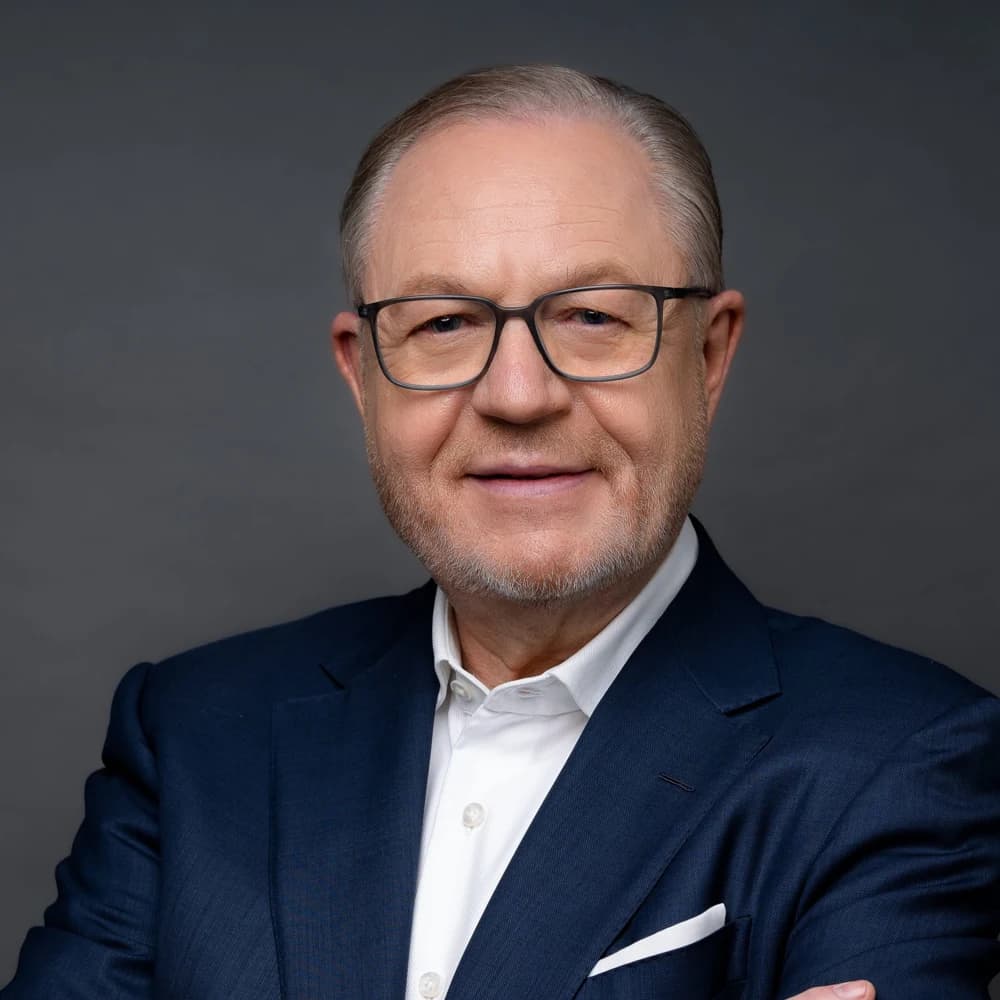
Founder and CEO transformis Consulting SE | Guest Professor ECNU Shanghai | Certified Business Mediator (German Mediation Act) | Head of the Family Businesses competence team
Let’s talk about your situation and what you want to develop in your organisation.