














Optimisation in transformation
Process optimisation
Analyse and simplify business processes across departmental boundaries and link them to clear responsibility.
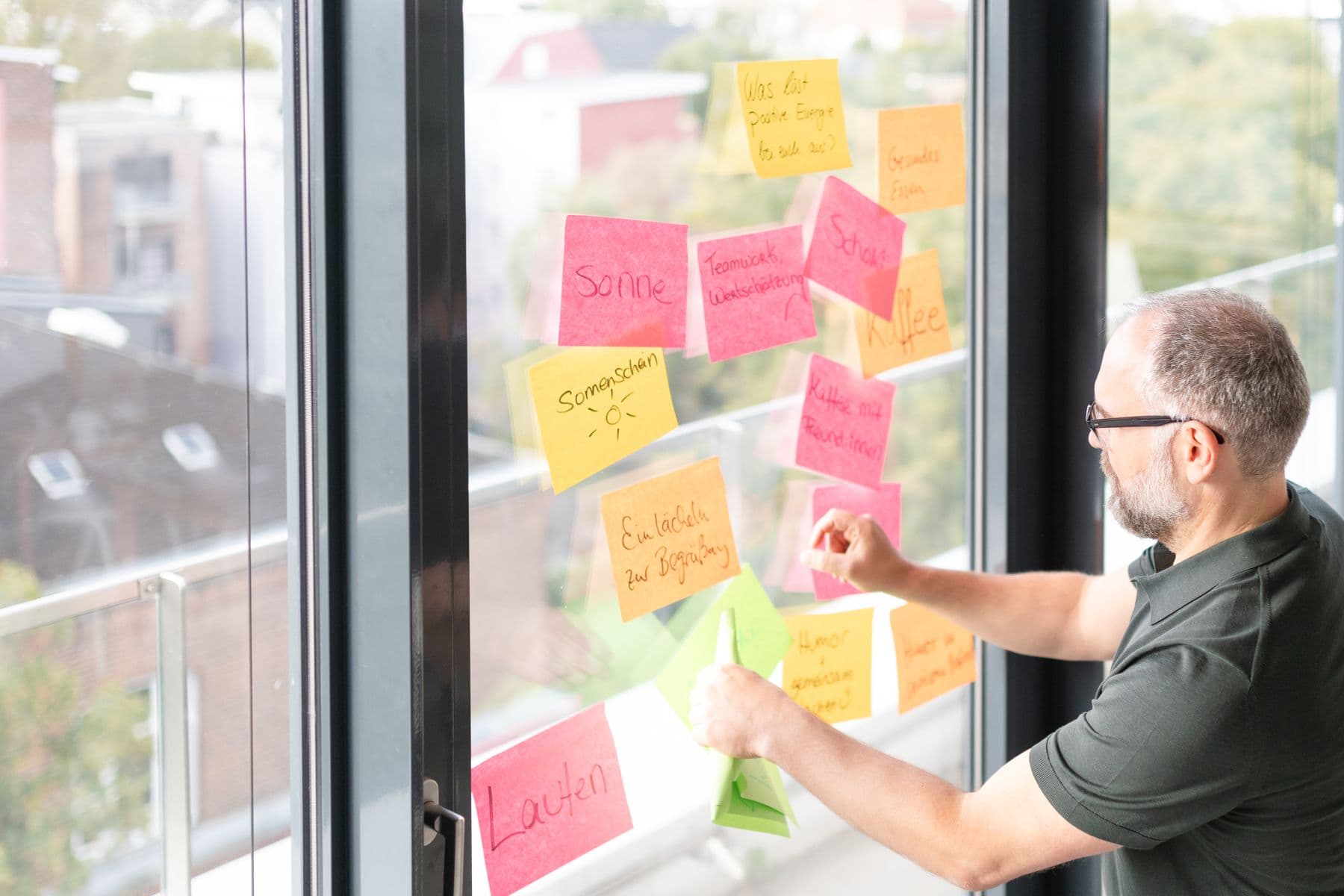
Long lead times, media discontinuities and recurring queries indicate that processes no longer fit the task. Process optimisation starts with individual business processes and looks at them from beginning to end. The guiding question is: which steps does the result actually need, and who is responsible for them?
What you come away with
- Documented current process with identified breaks and loops
- Agreed target process with clarified interfaces and responsibilities
- Prioritised measures for implementation and monitoring
How we work
- 01
Select the process
Identify the process most in need of clarification and the expected result.
- 02
Map the current process
Make handovers, waiting times and queries visible with the people involved.
- 03
Design the target process
Sort activities, clarify interfaces and assign responsibility.
- 04
Implement and review
Introduce changes, evaluate experience and fine-tune the process.
Analysing the process end to end
In a process analysis, the selected process is traced together with the people involved from all the departments it touches. Inputs, activities, handovers, approvals and results are made visible. This shows where information is missing, where tasks are left waiting and where steps are carried out more than once.
Sorting and simplifying activities
Value-adding activities are improved, necessary ancillary activities are reduced to an appropriate level and superfluous steps are removed. Ancillary activities in particular hold potential, because they often contain weaknesses at the interfaces between processes. Standardisation, better mapping in IT systems or automation come into consideration where the process has been clarified first.
A process does not get better simply by being digitalised. It has to be clarified first.
Defining responsibility and interfaces
An improved process only holds if responsibilities are unambiguous. Process ownership, decision paths and interfaces between departments, sites or companies are agreed. Where data flows across several departments, organisational responsibility for master data is part of this too.
Book an initial callDigitalisation needs processes to be clarified first
A frequent occasion is digitalisation without redesigning the process. Existing processes are transferred to new systems, while media discontinuities and duplicated work remain. We therefore first clarify what the process should look like in future and who makes which decision. Only on this basis can one judge which IT solution or automation genuinely reduces the workload.
Linking process optimisation with learning
Improved processes have to be learned in everyday work. In earlier projects, transformis combined business process optimisation with a learning architecture in which those involved develop, test and evaluate improvements. This builds the ability to keep developing processes independently after the project. Which formats fit depends on the scale of the undertaking and the departments involved.
Read more
Deliverables: Documented current process with identified breaks and loops; Agreed target process with clarified interfaces and responsibilities; Prioritised measures for implementation and monitoring.
We design processes, responsibility and collaboration. Selecting and introducing software, IT integration and technical logistics planning are carried out with the relevant specialists. AI-supported process automation is covered in the AI & Work field.
Frequently asked questions
How does process optimisation differ from value stream management?
Value stream management looks at the entire flow of a product or service from demand to the customer and often serves as an overarching diagnosis. Process optimisation works on individual business processes and their activities, handovers and responsibilities. The two perspectives can be combined.
Which processes are suitable?
Processes that run across several departments and show long lead times, media discontinuities, queries or duplicated work. These may be sales, procurement, service or administrative processes. The selection depends on importance and the need for clarification.
Who works on the project?
The people who carry the process, from all the departments it touches, as well as the managers who decide on responsibilities. Their knowledge of day-to-day work is the most important source for the analysis. Decisions on responsibility and resources are taken by management.
Prefer to talk directly?
What decision are you facing? Together, we clarify your situation, the people involved and the right next step.

Jan-Niclas Bockard
Director | Chief Operating Officer (COO) | Head of corporate strategy competence team
Your initial call
Let’s talk about your situation and what you want to develop in your organisation.
- Your situation
- What brings you to us
- Possible next steps